The Questions That Changed the Way I Build Artificial Intelligence
Throughout my career in Enterprise AI, I believed success came from having the right technical answers. Over time, I discovered that the greatest breakthroughs came from asking better questions, listening more carefully, and putting people, not technology at the center of innovation.

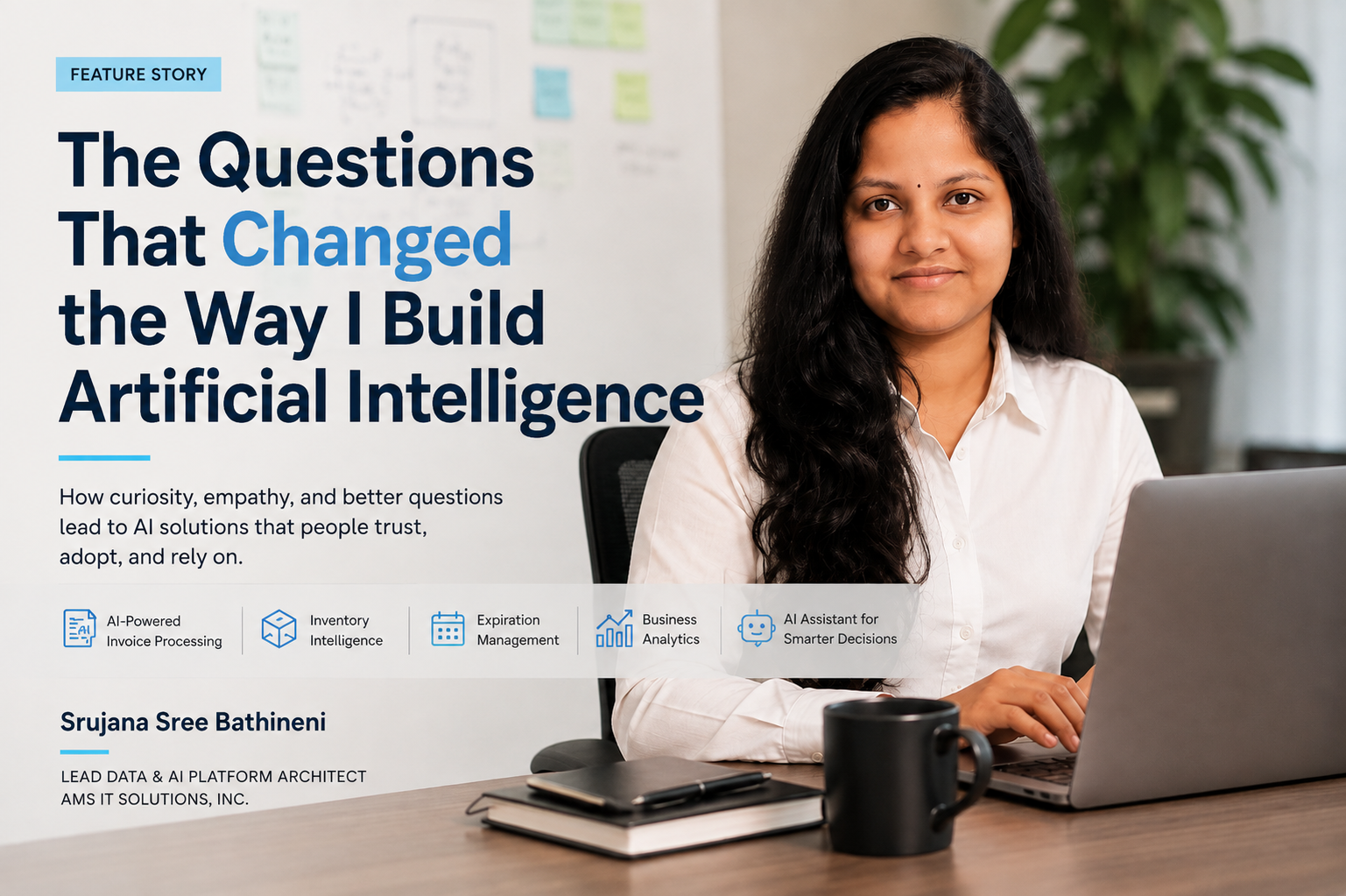
When I first began my career in technology, I believed success came from having the right answers.
The right architecture.
The right technology.
The right solution.
Like many engineers, I measured progress by how much I knew and how quickly I could solve technical problems. Every new project was an opportunity to build something smarter, faster, or more efficient. I thought technical expertise was the most valuable thing I could bring to the table.
Over time, I discovered that the most meaningful lessons of my career had very little to do with technology.
They came from people.
The turning point wasn't a promotion, a certification, or learning a new programming language. It happened gradually through conversations with business users, project stakeholders, and people whose jobs looked nothing like mine.
Instead of asking for artificial intelligence, they asked for something much simpler.
They wanted to spend less time on repetitive work.
They wanted better visibility into their operations.
They wanted to make confident decisions without digging through spreadsheets or disconnected systems.
Those conversations changed how I approached every project.
I stopped beginning with the question, "What technology should we use?"
Instead, I started asking, "What problem are we trying to solve?"
It sounds like a small shift, but it completely changed the way I think, not only as an engineer, but as a leader.
I learned that the best technology isn't always the most advanced. It's the technology that fits naturally into people's work, earns their trust, and quietly makes their day a little easier.
That realization also changed the way I viewed leadership.
Early in my career, I believed leaders were expected to have every answer. I admired people who could walk into a room and immediately solve difficult problems.
Today, I admire something different.
I admire leaders who ask thoughtful questions.
The ones who listen before they speak.
The ones who are curious enough to admit they don't know everything.
The ones who create space for different perspectives before making decisions.
I've learned that some of the best ideas come from the people closest to the problem, regardless of their title or background. Listening has become one of the most valuable technical skills I've developed.
Artificial intelligence continues to evolve at an incredible pace. Every week brings new models, new tools, and new possibilities. It's exciting to work in a field that's constantly changing.
But one thing has remained surprisingly consistent throughout my journey.
Technology changes quickly.
People don't.
People still want to feel heard.
They still want solutions they can trust.
They still want technology that helps rather than overwhelms them.
That's why I believe curiosity is one of the most underrated qualities in engineering.
Curiosity encourages us to understand before we design.
It reminds us that innovation begins with empathy.
It challenges us to solve the right problem instead of simply building the newest solution.
Looking back, I no longer measure success by how sophisticated a system is.
I measure it by different questions.
Did it make someone's work easier?
Did it help people make better decisions?
Did it earn trust?
Did it create lasting value?
If the answer is yes, then the technology has done exactly what it was meant to do.
One of the greatest gifts my career has given me isn't technical expertise. It's a different perspective on leadership.
Leadership isn't about always having the answers.
It's about asking better questions.
It's about staying curious.
It's about continuing to learn from the people around you, no matter how much experience you have.
As women in technology, we sometimes feel pressure to prove ourselves by knowing everything. I've learned that our greatest strength often comes from something much simpler—the willingness to listen, to learn, and to grow.
Those are the lessons that continue to shape not only the systems I build, but also the leader I'm becoming.


0 comments on “The Questions That Changed the Way I Build Artificial Intelligence”
Comments from signed-in readers are published immediately. Keep it professional.
Sign in to join the conversation.