The Leadership Role No One Prepared Me For
Here's a concise summary suitable as an abstract or introduction to the article.
This article is a deeply personal reflection on how motherhood transformed my understanding of leadership, success, and identity. Through my journey of raising two children while building a global technology career, I explore how life's most challenging seasons develop resilience, empathy, adaptability, and courage—qualities that no boardroom or leadership programme can fully teach. Supported by insights from leading research and industry experts, I challenge the conventional view of motherhood as a career interruption and argue that it is, in fact, one of the world's most powerful leadership development experiences.
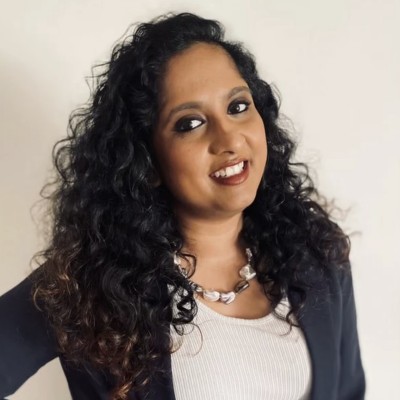
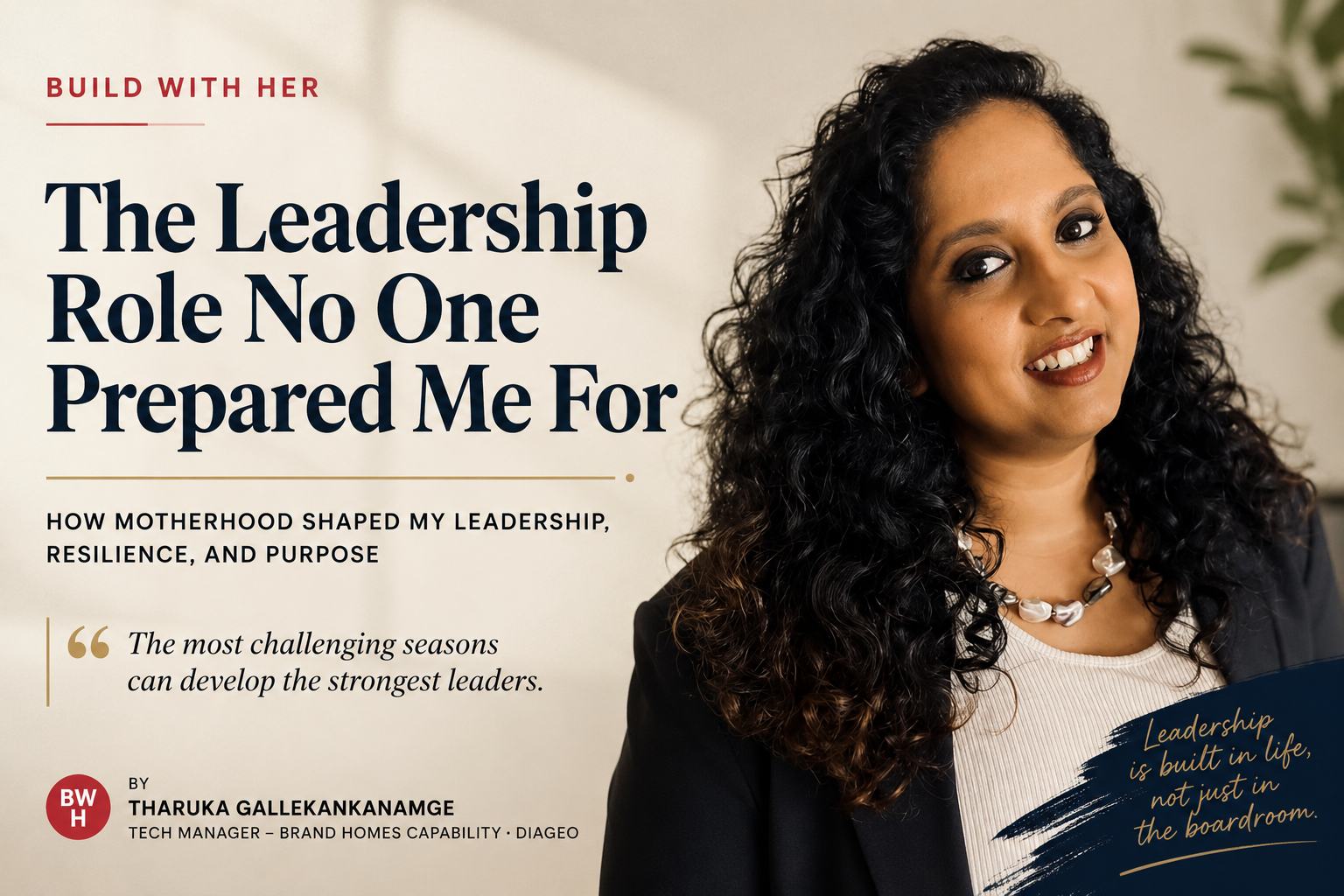
The Greatest Leadership Role I Ever Earned Didn't Come With a Promotion
"The most important thing a father can do for his children is to love their mother." — Theodore Hesburgh
I've always loved that quote.
As I grew older, I found myself wondering if there was an equally powerful truth about mothers. Not because motherhood is greater than fatherhood, but because it is often misunderstood. We celebrate mothers for their sacrifice, resilience and unconditional love. Yet we rarely acknowledge something else that motherhood quietly does.
It builds leaders.
Not the kind that organisations typically recognise through job titles, promotions or annual performance reviews, but the kind that life shapes through responsibility, uncertainty, humility and purpose.
For a long time, I didn't see it that way.
Like many ambitious women in their twenties, I had a plan.
I left my home country, Sri Lanka, to build a life and career in India. I worked hard, embraced every opportunity, changed industries, learned new technologies and gradually found myself leading teams, products and global technology platforms. My definition of success was straightforward: keep learning, keep delivering and keep climbing.
I believed leadership was something that happened in boardrooms.
I thought it was built through experience, executive meetings, difficult stakeholders and increasingly larger responsibilities.
Then, in my late twenties, I became a mother.
Nothing—not university, not my professional experience, not leadership training—prepared me for that moment.
People often tell you that having a baby changes your life.
What they don't tell you is that it changes your identity.
Overnight, success stopped being just about me.
Every decision suddenly had another heartbeat attached to it.
My calendar was no longer my own. My priorities shifted in ways I couldn't have imagined. The woman who once prided herself on having every detail planned quickly realised that babies have absolutely no respect for carefully constructed plans.
For someone who liked control, motherhood was the greatest lesson in surrender.
I didn't lose ambition.
If anything, I became even more determined.
I wanted to continue building my career while also becoming the kind of mother my daughter deserved.
Like many women, I convinced myself that I simply needed to become better at balancing everything.
Balance.
It's one of those words that sounds beautiful until you actually try to live it.
Years passed.
My career continued to grow. I was leading larger initiatives, working across geographies, solving increasingly complex technology problems and learning skills that no textbook could teach.
At the same time, I was learning an entirely different set of skills at home.
Patience, Empathy, Negotiation, Conflict resolution, Prioritisation & Managing emotions—both my children's and my own and many more.
The irony wasn't lost on me.
The same capabilities that organisations described as "executive leadership competencies" were being developed every single day around my dining table, during bedtime stories and in the quiet moments of parenting that no one ever sees.
Then came another defining decision.
In my early thirties, my husband and I decided to have a second child. People assumed that because we already had one child, we knew exactly what we were signing up for. The truth was quite the opposite. This time, I understood exactly how difficult motherhood could be. And I chose it again.
Life, however, had its own plans. Our son arrived prematurely.
Those days are etched into my memory in a way I will never forget.
Suddenly, nothing else mattered. Not deadlines, Not presentations, Not quarterly objectives., Only hope, Only faith, Only wanting this tiny little human to be healthy.
That experience changed something deep within me. It taught me that strength doesn't always look like confidence. Sometimes strength is simply showing up. Sometimes courage is sitting in uncertainty when there are no answers. Sometimes leadership is holding everything together while quietly wondering if you're going to fall apart yourself.
Ironically, those same lessons transformed the way I led people at work. I became less interested in appearing like the person with all the answers. I became more interested in creating environments where people felt safe enough to ask questions. I stopped measuring productivity by hours. I started measuring it by outcomes. I learned that empathy isn't the opposite of high performance.
It is often what enables high performance.
When researchers at McKinsey & Company published Women in the Workplace, one insight particularly resonated with me. Women often take on disproportionate amounts of caregiving and emotional labour while simultaneously facing higher expectations at work. The report also found that women leaders frequently outperform in behaviours linked to inclusive leadership, employee development and psychological safety.
Reading that report felt strangely validating.
For years, I thought the leadership skills I was developing at home somehow didn't count.
Now I realised they were perhaps the most valuable skills I had ever learned.
Economist Claudia Goldin has spent decades studying what she calls the "motherhood penalty." Her research demonstrates that the biggest divergence in men's and women's earnings often begins when children enter the picture—not because women suddenly become less capable, but because workplaces continue to reward uninterrupted careers and constant availability.
That finding made me stop and think.
Isn't it ironic?
The very life experience that teaches resilience, adaptability, emotional intelligence and decision-making under pressure is often viewed as a professional disadvantage.
Meanwhile, organisations spend millions of dollars trying to teach those same competencies through leadership programmes.
Leadership expert Herminia Ibarra argues that leadership is formed through experiences that stretch our identity, not simply through acquiring new knowledge.
If that's true, then motherhood may be one of the most profound leadership development experiences a person can have.
Not because mothers are superheroes.
I actually dislike that label.
Calling mothers superheroes unintentionally suggests that doing the impossible should simply be expected.
We're human.
We get tired.
We doubt ourselves.
We make mistakes.
We carry guilt.
Some days we feel like exceptional leaders and average parents.
Other days it's the opposite.
I've lived both.
There have been days when I've finished a global leadership call only to rush into a parent-teacher meeting.
Days when I have mentally switched from discussing technology strategy to helping with homework in less than ten minutes.
Days when my children were asleep before I finished work.
Days when work waited because my family needed me more.
And somewhere in between those moments, I realised something that completely changed my perspective.
Balance was never the goal.
Presence was.
Life isn't a perfectly balanced scale. It's a series of seasons. Sometimes work demands more. Sometimes family does. Sometimes your ageing parents need you. Sometimes your children need you. Sometimes your marriage needs attention. Sometimes your own body quietly reminds you that your health cannot continue sitting at the bottom of the priority list.
For years I believed success meant giving 100% to everything.
Now I believe success is knowing what deserves your best energy in this particular season of life.
That shift didn't make me less ambitious.
It made me more intentional.
Author and researcher Brené Brown writes that vulnerability is not weakness; it is the birthplace of courage, connection and innovation.
Motherhood taught me exactly that.
Not through books. Through lived experience. When I reflect on my own leadership journey today, I don't immediately think about promotions or performance ratings. I think about the woman I was before becoming a mother. And the woman I became afterwards. One measured success by achievement. The other measures success by impact. One believed leadership meant having the answers. The other believes leadership means helping others find theirs. One chased perfection. The other has finally learned to embrace progress.
People still ask women whether they believe they can "have it all."
I've stopped trying to answer that question.
I think it's the wrong question.
The better question is this:
Why do we still define leadership as though the people leading organisations don't also lead families, navigate ageing parents, nurture relationships, care for their health, experience loss, or carry invisible responsibilities that never appear on an organisational chart?
Leadership does not begin when someone hands you a title. It begins the moment life gives you responsibility for another human being. It grows every time you choose courage over comfort. Every time you sacrifice today for someone else's tomorrow. Every time you keep showing up despite uncertainty.
Motherhood didn't interrupt my leadership journey. It accelerated it. Not because it made life easier.
Quite the opposite.
It made me more resilient, More empathetic, More adaptable, More patient and More intentional.
Most importantly, it reminded me that leadership isn't about becoming more important. It's about becoming more human.
When I look at my children today, I don't see the reason my career became harder.
I see the reason I became a better leader.
And perhaps that is the greatest leadership programme I never realised I had enrolled in.
References
Brown, B. (2018). Dare to Lead. Random House.
Goldin, C. (2023). Understanding the Economic Impact of the Motherhood Penalty. Nobel Prize Lecture and related research.
Hochschild, A. R., & Machung, A. (2012). The Second Shift. Penguin Books.
Ibarra, H. (2015). Act Like a Leader, Think Like a Leader. Harvard Business Review Press.
Lean In & McKinsey & Company. (2024). Women in the Workplace Report.
McKinsey & Company. (2023). Women in the Workplace.
World Economic Forum. (2025). Global Gender Gap Report.
Grant, A. (2021). Think Again: The Power of Knowing What You Don't Know.
Harvard Business Review. Multiple articles on inclusive leadership, psychological safety, identity transitions and leadership development.
"The greatest leaders are rarely shaped by the easiest chapters of their lives. More often, they are forged in the seasons no résumé can capture." — Tharuka Gallekankanamge Gowda



0 comments on “The Leadership Role No One Prepared Me For”
Comments from signed-in readers are published immediately. Keep it professional.
Sign in to join the conversation.