The Iceberg Theory of Dyslexia: The Story Hidden Beneath Every Struggling Reader
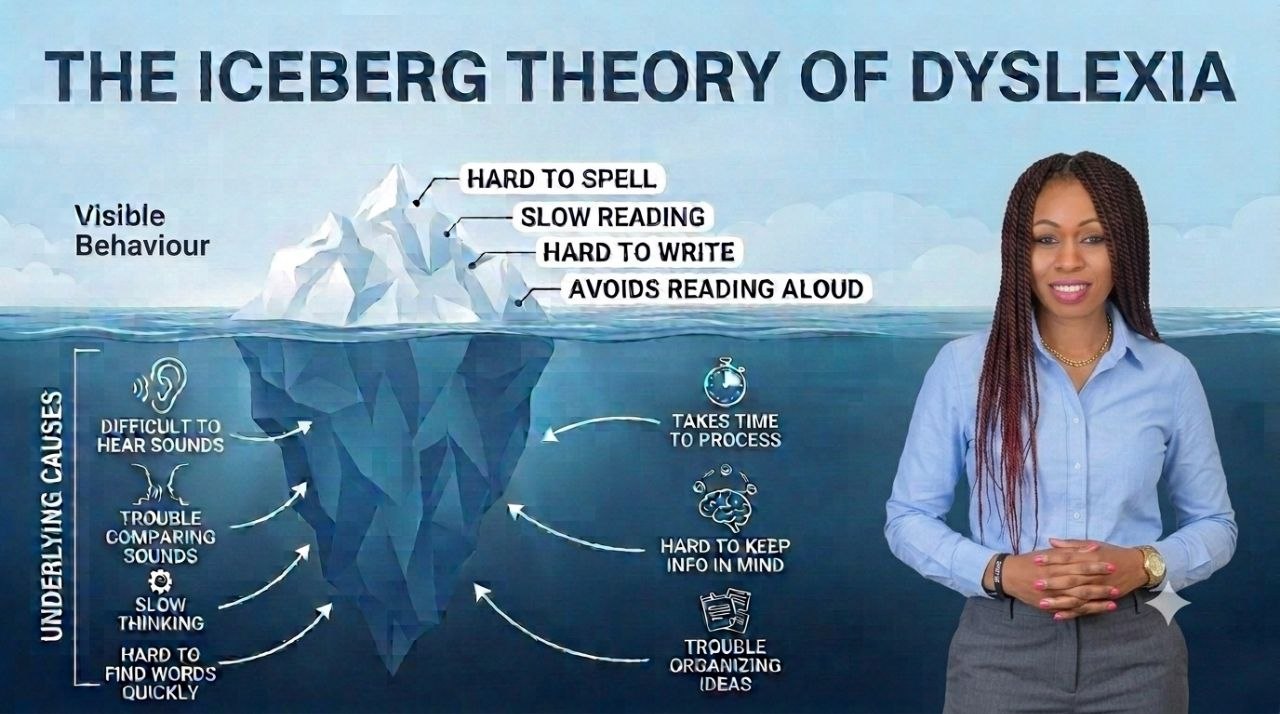
The Iceberg Theory of Dyslexia reminds us that while people often notice reading and spelling difficulties, they rarely see the hidden emotional struggles beneath the surface, such as anxiety, frustration, exhaustion, slow processing, and low self-confidence. These invisible challenges can have a profound impact on a person's learning journey and overall well-being, making empathy, patience, and appropriate support just as important as academic intervention. When we choose to look beyond the visible struggles, we empower individuals with dyslexia to discover their strengths, build confidence, and reach their full potential.

The Iceberg Theory of Dyslexia: The Story Hidden Beneath Every Struggling Reader
"She can read...."
"He is just not trying hard enough."
"Don't worry. She will grow out of it."
These are words many children with dyslexia hear, either directly or indirectly. They may sound harmless, but they often stem from a misunderstanding. They are based on what people can see, while ignoring everything they cannot.
This is why I often think of The Iceberg Theory of Dyslexia.
When we look at an iceberg floating in the ocean, we only see a small fraction above the water. The larger, heavier, and more significant part remains hidden beneath the surface. Dyslexia is much the same. The reading mistakes, spelling challenges, slow writing, or difficulty recognizing sounds in words are merely the visible tip of the iceberg. They are what teachers, parents, classmates, and even strangers notice first.
But beneath that visible struggle lies a much deeper story. One that is rarely seen and even less understood.
It is the child whose heart races when the teacher says, "Please read the next paragraph."
It is the student who spends hours completing homework that others finish in minutes, yet still feels they have not done enough.
It is the frustration of knowing the answer but being unable to express it quickly or accurately on paper.
It is the anxiety that appears before every reading exercise, every spelling test, and every classroom presentation.
It is the slow processing that others mistake for laziness, lack of effort, or poor intelligence.
It is the quiet exhaustion that comes from working twice as hard every single day just to keep pace with everyone else.
And the most heartbreaking of all, it is the gradual loss of confidence that happens each time a child begins to believe they are "not smart enough" simply because learning looks different for them.
These hidden struggles are often heavier than the reading difficulty itself.
Many children with dyslexia are incredibly intelligent, imaginative, creative, and capable. They dream, solve problems, ask thoughtful questions, and see the world from unique perspectives. Yet these strengths are often overshadowed by the one thing they find difficult: reading.
That is the reality for many individuals with dyslexia.
The good news is that this story does not have to end there.
When parents, teachers, caregivers, and communities begin to understand what lies beneath the surface, everything changes. Patience replaces frustration. Encouragement replaces criticism. Understanding replaces judgment.
A child who feels seen becomes willing to try again.
A learner who feels supported begins to believe in themselves.
And confidence once buried beneath years of misunderstanding starts to grow.
With the right intervention, evidence-based instruction (Structured Literacy Approach), and compassionate support, children with dyslexia can become successful readers, confident learners, and adults who discover that their greatest strengths were never limited by their reading challenges.
The next time you meet someone who struggles to read, pause before making assumptions.
Remember that you are only seeing the tip of the iceberg.
Beneath the surface may be extraordinary resilience, remarkable determination, untapped creativity, and a child who is trying harder than anyone realizes.
The Iceberg Theory of Dyslexia reminds us of a simple but powerful truth: the greatest struggles are often invisible, and so is the incredible strength it takes to overcome them.
When we choose to look beneath the surface, we do more than understand dyslexia. We honour the person behind it.
And sometimes, being truly seen is the very thing that helps someone rise above the challenge they are facing.

0 comments on “The Iceberg Theory of Dyslexia: The Story Hidden Beneath Every Struggling Reader”
Comments from signed-in readers are published immediately. Keep it professional.
Sign in to join the conversation.