The Biggest Gap in Education Isn't What We Teach. It's How We Teach.
As technology evolves faster than ever, education faces an important question: Are we preparing children to remember information or to make better decisions? This article explores why the future of learning should focus on judgment, critical thinking, and real-world decision making, especially in an AI-driven world.

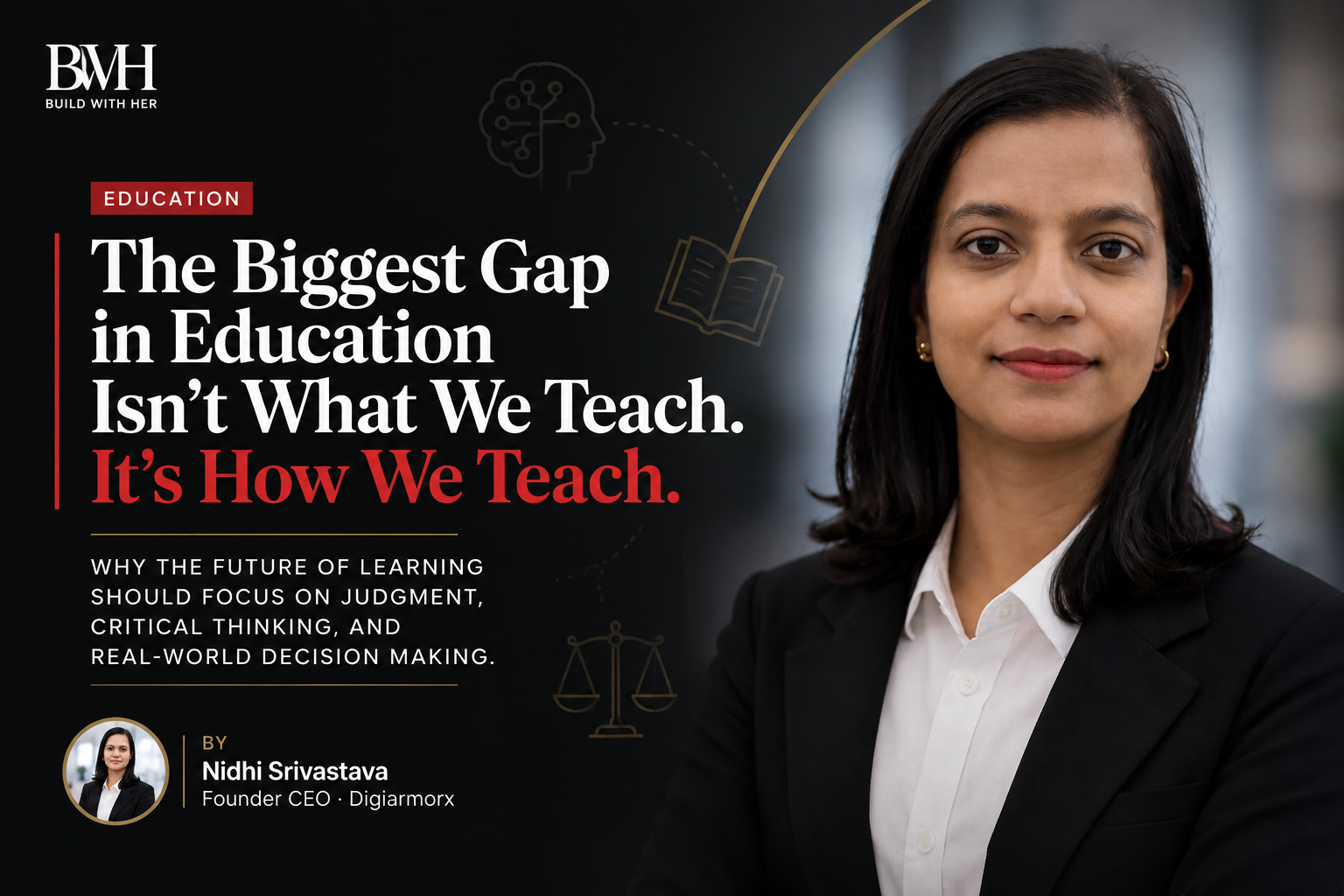
The Biggest Gap in Education Isn't What We Teach. It's How We Teach.
There was a time when learning meant memorizing information because information itself was scarce.
Today, information is everywhere.
A child can ask an AI assistant a question, watch a tutorial, or find an explanation within seconds. Knowledge has become increasingly accessible. Yet one question keeps bothering me.
If information has become easier to access, why does making good decisions still seem so difficult?
Over the years, both as a cybersecurity professional and as a parent, I've found myself thinking less about technology and more about human behavior.
Children don't usually make risky online decisions because they don't know the rules.
They make them because they're curious.
Because they trust someone.
Because they're excited.
Because they're embarrassed.
Because they're afraid of missing out.
Because someone they know asked them to.
None of those are technology problems.
They're human problems.
And perhaps that's where education has an opportunity to evolve.
For generations, education has been remarkably successful at helping students remember facts. But the world our children are entering increasingly rewards something different: judgment.
How do we teach a child to pause before reacting?
How do we help them recognize manipulation without making them fearful?
How do we encourage curiosity while also developing caution?
How do we prepare them for situations that haven't even been invented yet?
These aren't questions confined to cybersecurity. They apply equally to artificial intelligence, social media, misinformation, digital wellbeing, and every new technology children will encounter in the years ahead.
The pace of technological innovation is accelerating.
Education, understandably, moves more carefully.
Bridging that gap may become one of the defining challenges of our time.
I don't believe the answer is adding more content.
Children already consume more content than any generation before them.
Perhaps the real opportunity lies in creating learning experiences that help them think, question, reflect, and make better decisions.
Knowledge tells us what to do.
Wisdom helps us decide when, why, and whether we should do it.
As AI becomes woven into everyday life, I often wonder whether the future of education will be measured less by how much students remember and more by how well they navigate uncertainty.
Maybe the next evolution of education isn't about teaching faster.
Maybe it's about helping children think better.
That is a conversation worth having. Not just for educators or technologists, but for every parent wondering what skills will matter most in the world their children are inheriting.

0 comments on “The Biggest Gap in Education Isn't What We Teach. It's How We Teach.”
Comments from signed-in readers are published immediately. Keep it professional.
Sign in to join the conversation.