Stop Undervaluing Yourself: What 10 Years in Recruitment Has Taught Me About Gender and Career Progression
Over 10 years in recruitment, I've watched talented women talk themselves out of opportunities while less qualified candidates confidently put themselves forward. If we want to see more women in senior leadership, both recruitment practices and mindsets need to change, starting with recognising and communicating our own value.

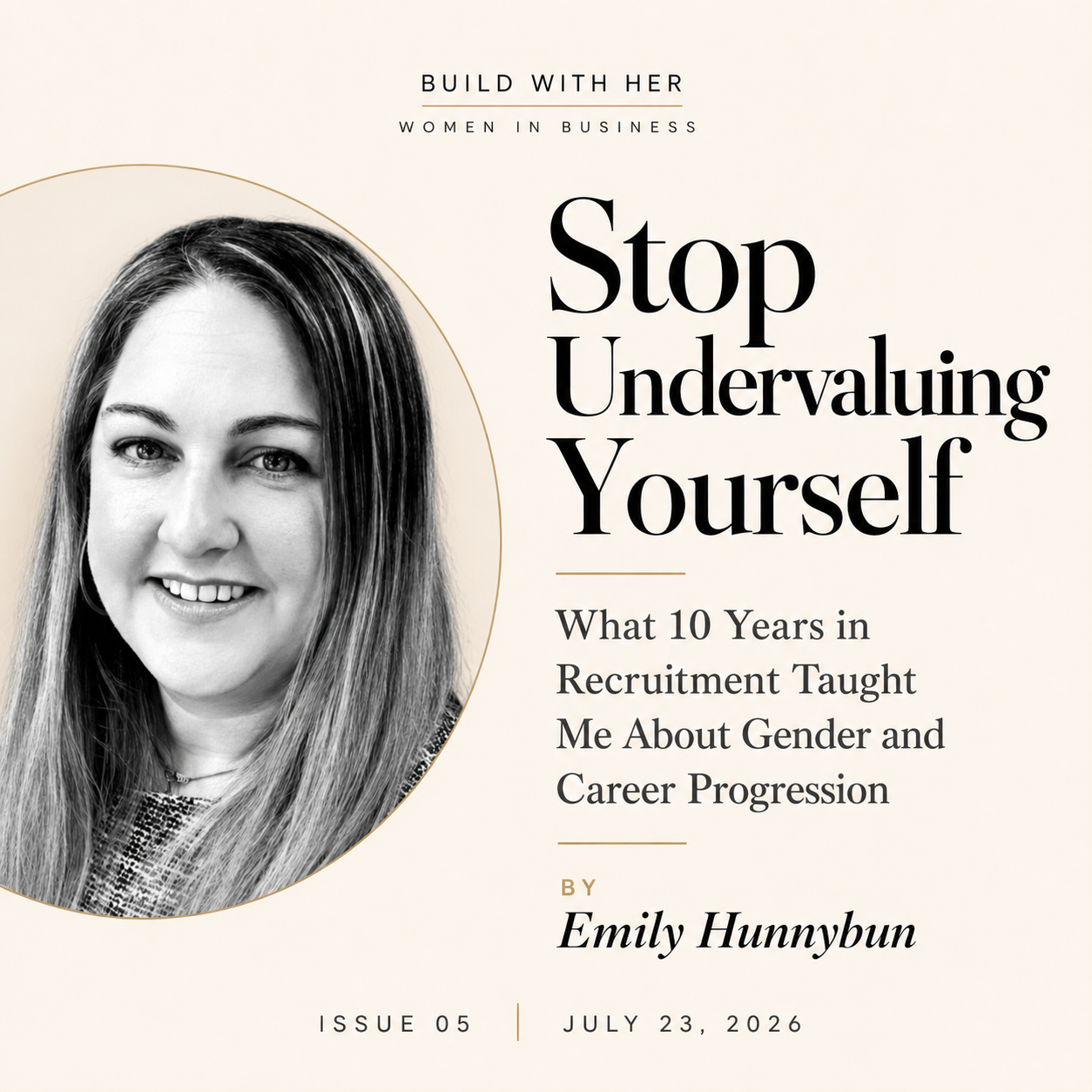
I have been in recruitment for over 10 years, recruiting candidates at every level across a wide range of roles. Throughout that time, one thing has consistently stood out to me: the difference between how male and female candidates position themselves, and the impact this can have on their careers.
I regularly have to stop female candidates from talking themselves out of thousands of pounds in salary, encourage them to recognise and highlight their achievements, or simply reassure them that they are capable of doing the role. On the other hand, I have had conversations with male candidates who clearly do not demonstrate the skills or experience required, yet they confidently argue that they do or adjust their story in an attempt to convince me otherwise.
Now, I'm not saying men are wrong or that women need to become more masculine. However, something does need to change. At entry level, female representation is often close to 50%, but this drops significantly as you move up the career ladder. By executive level, women occupy only a small proportion of leadership positions. That is unlikely to change unless the way we recruit evolves too.
Many senior leadership job adverts are filled with male-coded language. In fact, even the word "leadership" is considered male-coded, which can naturally reduce the number of female applicants. HR teams, talent acquisition professionals and hiring managers need to work together to create more inclusive job adverts. Male applicants are more likely to apply when they believe they meet around 60% of the criteria, while female applicants often wait until they feel they meet almost all of it. That reality should be considered when writing job descriptions.
Many men are rewarded for displaying confidence, with confidence often being mistaken for competence. They walk into a room as though they own it and are praised for their self-assurance. When a woman displays the same behaviour, she is more likely to be labelled aggressive, arrogant, difficult or worse. Assumptions are made, not just by men but by women too so it can feel like no matter what you do it’s wrong.
Women have often been conditioned to take their achievements in their stride. It's just part of the job, right? While Dave is loudly telling the CEO about the 10% sales increase in his region and explaining how he drove the results, Linda is quietly praising her team for the 20% growth in her area while speaking to a group of managers. Guess who is more likely to be considered for promotion? The truth is that nobody knows what you do unless you make sure they do. Giving credit to your team is important, but if you lead that team, you should own your part in its success. You do not need to be the loudest person in the room, but the right people do need to hear your story.
Getting through the recruiter is often not the problem. The challenges usually arise at interview stage. We have to remember that the majority of senior leadership positions are still held by men. Add unconscious bias and human nature into the mix, and people are naturally drawn towards those who remind them of themselves.
Yes, interview panels are becoming more balanced, with both male and female interviewers represented. However, the woman on the panel may have had to fight hard to get there and may unconsciously look for the same traits that helped her succeed. Alternatively, her opinion may not carry equal weight if she is present purely to create the appearance of balance.
Let's also remember that interviewers are rarely trained. Interviewing is often treated as something anyone can do because they "know what they're looking for". As a result, awareness of different communication styles, neurodiversity, unconscious bias and behavioural differences is often lacking. Organisations need to ensure hiring managers receive proper interview training. They should understand how to uncover evidence of capability, identify genuine skills and experience beneath confidence or self-promotion, and recognise their own biases during the decision-making process.
Then comes the offer stage, and this is the part that frustrates me most.
Stop undervaluing yourself.
I’ll never forget when I was hiring for a role and noticed a clear pattern. Every male candidate confidently asked for £33,000 to £35,000. Every female candidate asked for £26,000 to £28,000, usually accompanied by, "If that's okay?" or "I'm happy to negotiate if needed." No significant difference in skill set or experience and one of the Female candidates was successful but……… do you know what happened?
The hiring manager attempted to offer less than the salary band for the role. Why? Because the candidate didn't know the banding. She would still be earning more than she was in her previous position and hadn't asked for anything higher.
Is it unethical? Absolutely.
Is it uncommon? Unfortunately not.
So my advice is simple:
• Never assume the person reading your CV understands your job. Be specific. Include metrics. Clearly showcase your achievements.
• Don't rule yourself out before you've even applied.
• You don't have to be the loudest person in the room, but you do need to be visible to the right people. Be strategic, not safe.
• Ask recruiters for advice. We genuinely enjoy helping people succeed. Find out what skills and experiences to focus on and prepare examples that demonstrate them.
• Let your personality show. It can make a real difference.
• Have confidence in your abilities. You have just as much right to be in the room as anyone else.
• Don't apologise for wanting what you're worth.
• Don't assume that asking for fair compensation will automatically price you out of a role.
I firmly believe that the right person should get the job, regardless of gender. But if a few things changed within the recruitment process, it could open more doors for talented people.
Men and women often approach situations differently. That's a fact. We do not need to be the same. What we need is greater recognition that the same message can be communicated in different ways, and that those differences should not diminish the value or impact of what is being said.
More than anything, I believe we need to stop feeling grateful just to be considered and start recognising our own worth. When we do that, the gender gap has a far better chance of narrowing.
So value yourself.
Because if you don't, don't be surprised when nobody else does either.



0 comments on “Stop Undervaluing Yourself: What 10 Years in Recruitment Has Taught Me About Gender and Career Progression”
Comments from signed-in readers are published immediately. Keep it professional.
Sign in to join the conversation.