Ethical Culture are the foundation of Women's Success at Work
Why Women Thrive in Cultures of Trust is a reflection on how ethics, compliance, and psychological safety create the foundation for inclusion and long-term business success. Drawing from my experience as an investigator and POSH Committee Presiding Officer, I explore how organizations that foster trust, accountability, and respect enable women to speak up, belong, lead, and thrive.

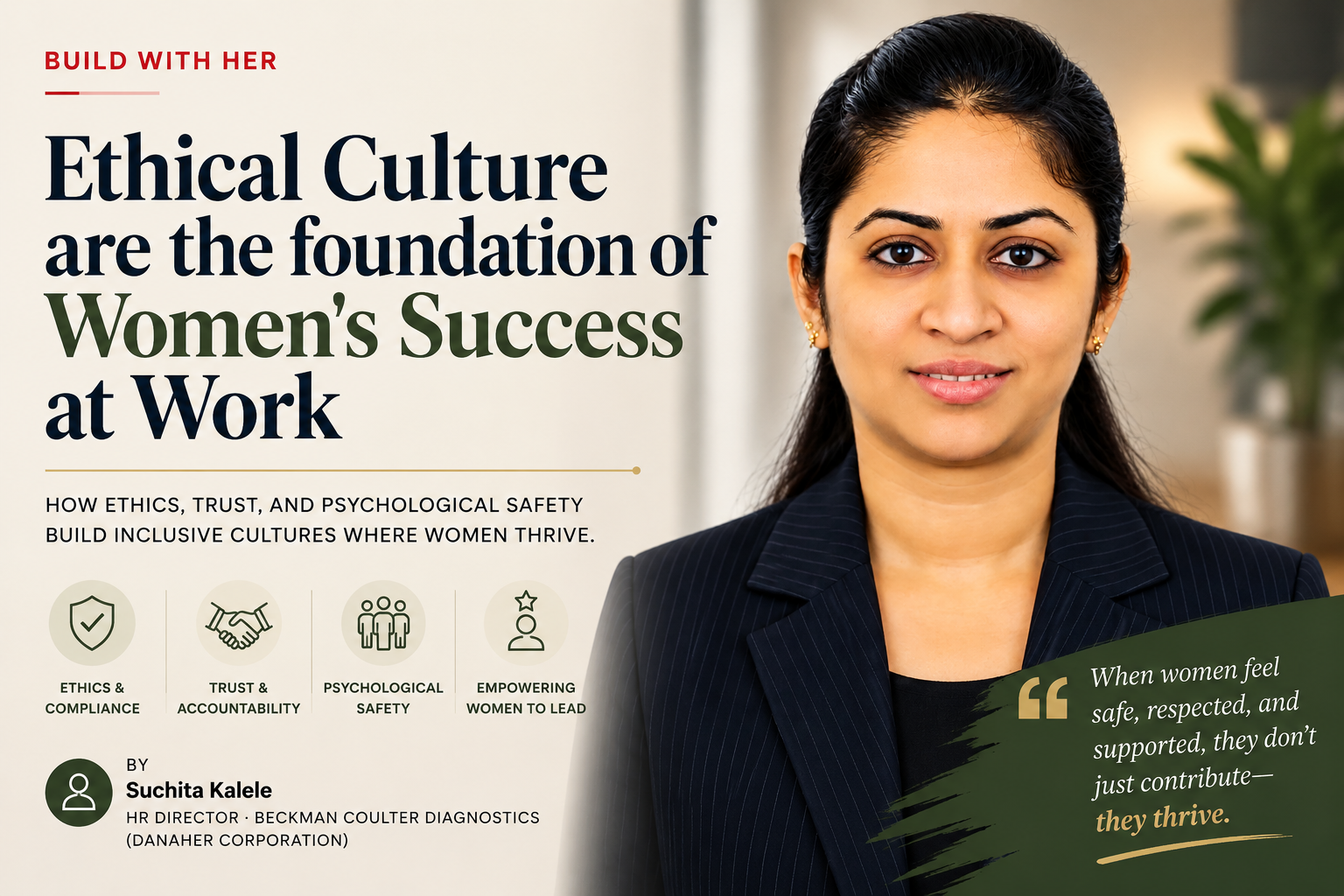
Why Ethical Cultures Are the Foundation of Women's Success at Work:
When discussions about women in the workforce take place, the focus is often on representation, leadership development, mentoring programs, and career advancement.
These conversations matter.
But there is a more fundamental question that organizations must first answer:
Do women feel safe enough to fully participate, contribute, challenge, innovate, and lead?
Because before women can thrive, they must belong.
And before they belong, they must trust.
Over the course of my career, I have had the privilege of serving as an investigator and Presiding Officer of POSH Committees. I have listened to employees who struggled to speak up.
I have supported individuals navigating difficult workplace experiences.
I have seen the courage it takes to report inappropriate behaviour and the lasting impact an organization's response can have on an employee's confidence, career, and wellbeing.
These experiences taught me a powerful lesson:
Inclusion is not created through programs. It is created through trust.
And trust is built through ethics, compliance, accountability, and leadership commitment.
The Hidden Link Between Compliance and Women's Advancement
Many organizations treat compliance and diversity as separate agendas. In reality, they are deeply interconnected.
Research continues to show that women in technology and other traditionally male-dominated sectors often cite workplace culture, lack of belonging, lack of support, and lack of trust as factors influencing retention and career progression.
The technology industry faces a well-documented retention challenge, with many talented women leaving not because they lack capability, but because they do not experience an environment where they can fully contribute and grow.
The question, therefore, is not simply how to attract women. The question is how to create workplaces where they choose to stay.
The answer starts with culture. When employees believe they can raise concerns without fear of retaliation, challenge ideas respectfully, report misconduct confidently, and trust leaders to act fairly, organizations create the psychological safety that enables people to perform at their best.
What Investigations Have Taught Me
One misconception about workplace investigations is that they are primarily about determining facts. While facts matter, investigations often reveal something deeper. They reveal culture.
Every concern raised by an employee tells a story about how safe people feel.
Every reluctance to report signals potential fear.
Every unresolved behaviour sends a message about what an organization is willing to tolerate.
As an investigator, I learned that employees are constantly watching.
They notice whether leaders hold themselves to the same standards as everyone else.
They notice whether high performers are treated differently.
They notice whether complaints are handled fairly, respectfully, and confidentially.
Most importantly, they notice whether organizational values are truly lived.
Culture is not what is written in the handbook. Culture is what people experience every day.
Why Boards Should Care
This is not only an HR issue.
It is a governance issue.
Boards today discuss talent shortages, innovation, digital transformation, AI adoption, reputation, and long-term growth.
None of these priorities can be achieved without trust.
An organization that fails to create safe workplaces risks losing talent, damaging its reputation, reducing employee engagement, and weakening innovation.
Conversely, organizations with strong ethical cultures attract and retain diverse talent, encourage healthy challenge, and create environments where new ideas can flourish.
Ethics and compliance are therefore not barriers to growth.
They are enablers of sustainable growth.
Creating a Workplace Where Women Can Thrive
The organizations making the greatest progress understand that compliance is not about avoiding risk.
It is about enabling people.
A few actions make a significant difference:
Create Multiple Safe Channels to Speak Up
Employees should know exactly where to go when something feels wrong.
Reporting mechanisms should be accessible, trusted, and free from retaliation concerns.
Hold Everyone Accountable
Nothing erodes trust faster than selective accountability.
Standards must apply equally, regardless of title or performance.
Build Leader Capability
Managers create the day-to-day employee experience.
Training leaders to recognize bias, manage conflict, and create inclusive environments has a far greater impact than policy documents alone.
Measure Trust
Organizations measure revenue, productivity, and market share.
They should also measure employee trust, psychological safety, inclusion, and ethics culture.
Reward Values, Not Just Results
The message employees hear is often determined by what gets recognized.
Celebrating how results are achieved is just as important as celebrating the results themselves.
A Call to Action
As more women enter technology, healthcare, engineering, and leadership roles, organizations have an opportunity and a responsibility.
The goal should not simply be increasing representation. The goal should be creating workplaces where women feel respected, protected, heard, and empowered to succeed.
Because diversity initiatives may open the door. Leadership programs may help women navigate the journey. But ethical cultures are what make them stay.
And when organizations build cultures grounded in integrity, accountability, and trust, they create something much bigger than compliance.
They create workplaces where everyone has the opportunity to thrive.
I am grateful to the organizations I have been part of throughout my career for demonstrating that ethics and business success are not competing priorities. Their unwavering commitment to compliance, fairness, and a zero-tolerance approach to misconduct showed me that strong cultures are built through consistent actions, courageous leadership, and respect for people.



0 comments on “Ethical Culture are the foundation of Women's Success at Work”
Comments from signed-in readers are published immediately. Keep it professional.
Sign in to join the conversation.