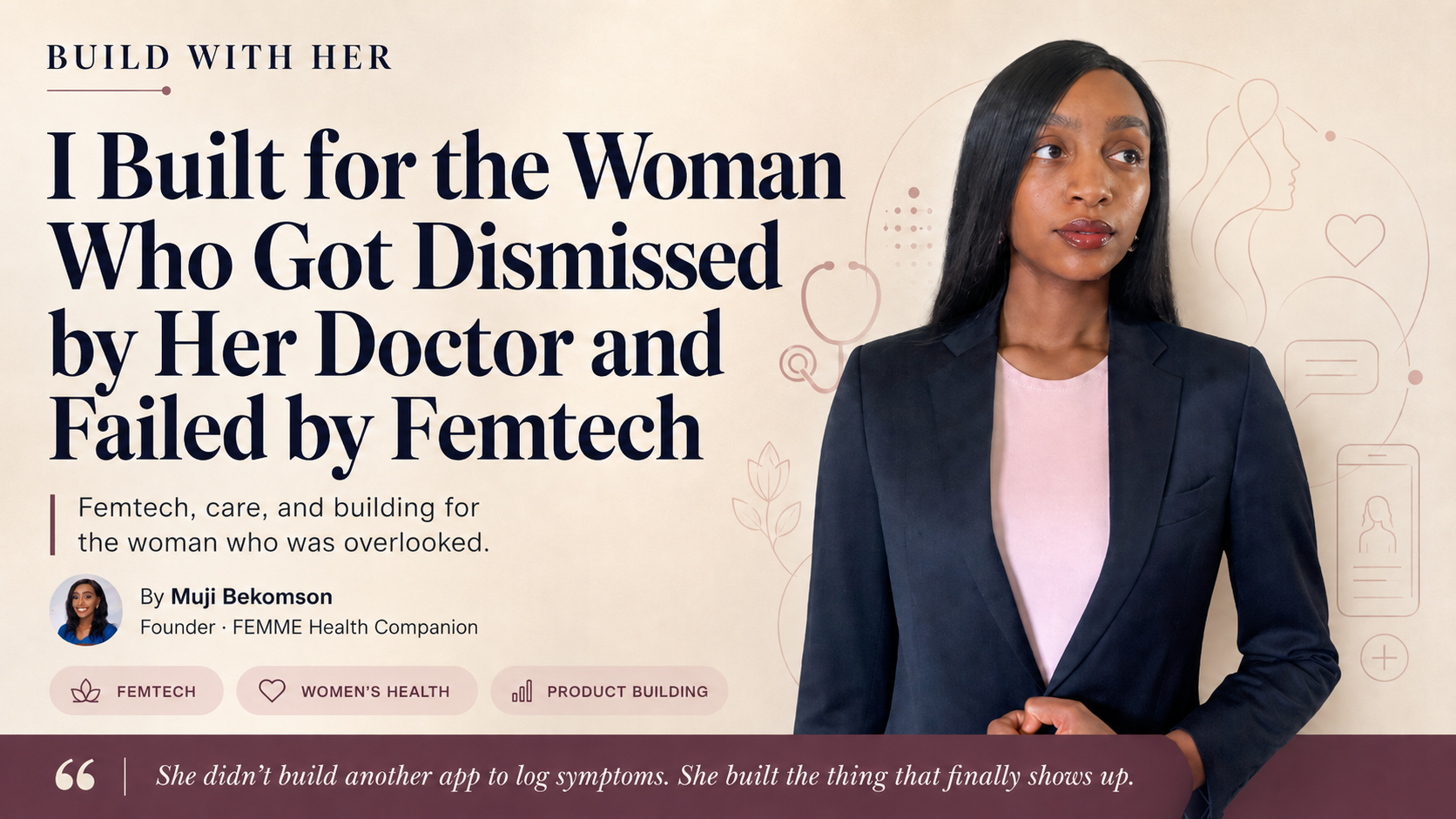
I Built for the Woman Who Got Dismissed by Her Doctor and Failed by Femtech
Four women dismissed in four different rooms, by doctors who moved too fast and femtech that never quite saw them. Muji Bekomson didn't build another app to log symptoms into. She built the thing that finally shows up, before any of them have to prove they deserve it.
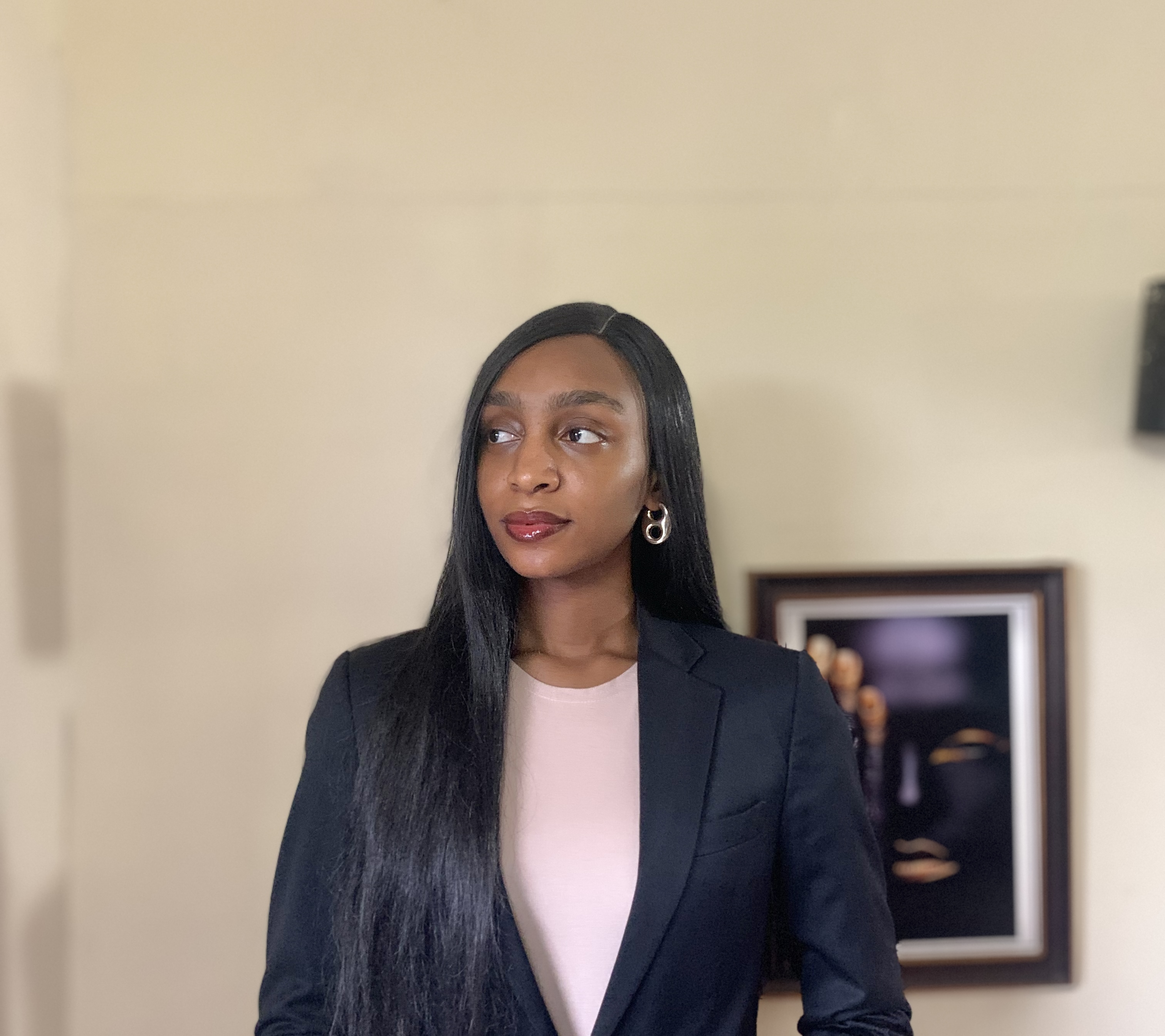
Dismissal does not wear one face. These are four of them, and what changed when someone finally showed up.
Dismissal does not always sound like a doctor telling a woman to get pregnant and see what happens. Sometimes it is quieter than that. A blood test that comes back normal while nothing about her feels normal. A door closed before a single test gets ordered. A diagnosis handed over with a pamphlet and no plan for the Tuesday after. A body monitored by five different apps that all agree, in their own way, that she is failing to manage it. I built FEMME for these women. I will call them by different names, though I have met a hundred versions of each.
Molly I'll call the first one Molly. She is nineteen, and every month for six years her body has folded her in half on someone's bathroom floor, waiting for the pain to loosen its grip enough to let her stand. Twice she has sat in a clinic describing that pain in detail, and twice she has been sent home without a single test ordered, told this is simply what periods feel like. Nobody has looked. Nobody has needed to, because the pain of a teenage girl rarely earns a referral on the first telling, or the second.
FEMME does not wait for a diagnosis to take her seriously. Every day it checks in; does she need comfort, does she need to be understood, or does she need a next step. On a comfort morning, she gets plain acknowledgment that this pain is real whether or not a doctor has written it down yet. On a next-step morning, she gets the exact words to bring back into that clinic, so she is harder to wave off a third time. She is not cured. She is not diagnosed. But she stops carrying the disbelief alone, and that alone changes how long she is willing to keep asking.
Elena Then there is the one I'll call Elena. Her labs have come back normal three times, thyroid clean, iron fine, every number filed neatly inside its normal range, while some nights she lies awake certain something inside her is quietly wrong anyway. She has started typing her symptoms into strangers' forums at midnight, because the one place that is supposed to have answers keeps handing her a clean chart and a shrug. She has started to wonder if she is imagining all of it.
FEMME does not need a lab result to believe her. She gets an audio boost instead of more text on a screen she is already tired of reading. Every week, it hands her a reflection built entirely from her own daily answers, patterns she can point to that no chart has ever captured. Proof, in her own words, that this has been happening the whole time. Normal labs stop feeling like evidence against her.
Charlotte A third woman, I'll call her Charlotte, already has the diagnosis. PCOS, confirmed, printed neatly on a discharge form and stapled to a pamphlet telling her to manage her stress and exercise more, as if stress were a task she could simply schedule around a toddler's 2am fever and a deck due at nine. Nobody explains what the diagnosis means for her actual week. The appointment ends. The support ends with it.
FEMME picks up exactly there. Every day calibrates to how much she actually has that day, because the same woman does not wake up with the same amount of herself twice in a row. On a low capacity morning, the prompt is small enough to actually finish. On a day she has more to give, it stretches with her. Someone finally accounts for the fact that a diagnosis on paper and a livable Thursday are two entirely different things, and that the second one is the part medicine usually skips.
Grace The last woman I think of most is the one I'll call Grace. Her nightstand has become a small museum of devices that were supposed to help: a ring that tracks her sleep, a scale, two abandoned apps, a color coded spreadsheet she built herself when none of them agreed with each other. She missed three days of entries last week and felt, absurdly, like she had failed at managing her own body. The tools built to help her had become one more thing she was failing at.
FEMME asks nothing of her that she is not already giving. It lives inside WhatsApp, the app already open on her phone, no new account to create, no onboarding flow standing between her and support. No streak to protect, no red mark for the days she goes quiet, and on a genuinely hard day, practical crisis support instead of a badge. It shows up, says what it needs to say, and never once measures her worth by whether she logged back.
Four women. Four different rooms, four different silences, but the same shape of loneliness sitting underneath each one. None of them needed another interface asking more of them. They needed something to notice, without conditions, on the ordinary day nobody else was paying attention to.
That same pain follows them past their phones, into Monday meetings and performance reviews and the mental math of getting through a workday nobody has adjusted for them. It is why I now bring this conversation to companies too, not as a wellness perk, but as business intelligence about half of every workforce they employ.
I did not build FEMME to replace a doctor, or fix a broken healthcare system, or invent a discipline none of these women asked for. I built different systems disguised as a companion, because building with her meant starting from what her actual day requires, not what a roadmap assumes. Someone who shows up before she has to prove she deserves it.
Comments
Loading comments…