At 55, My Curiosity About AI Changed the Direction of My Life
At 55, I followed my curiosity into artificial intelligence and discovered an entirely new direction for my life. This is not a story told from the finish line, but from the middle: about bringing decades of lived experience, intuition and Human Intelligence into AI, while continuing to learn, build and navigate an unexpected breast cancer diagnosis.
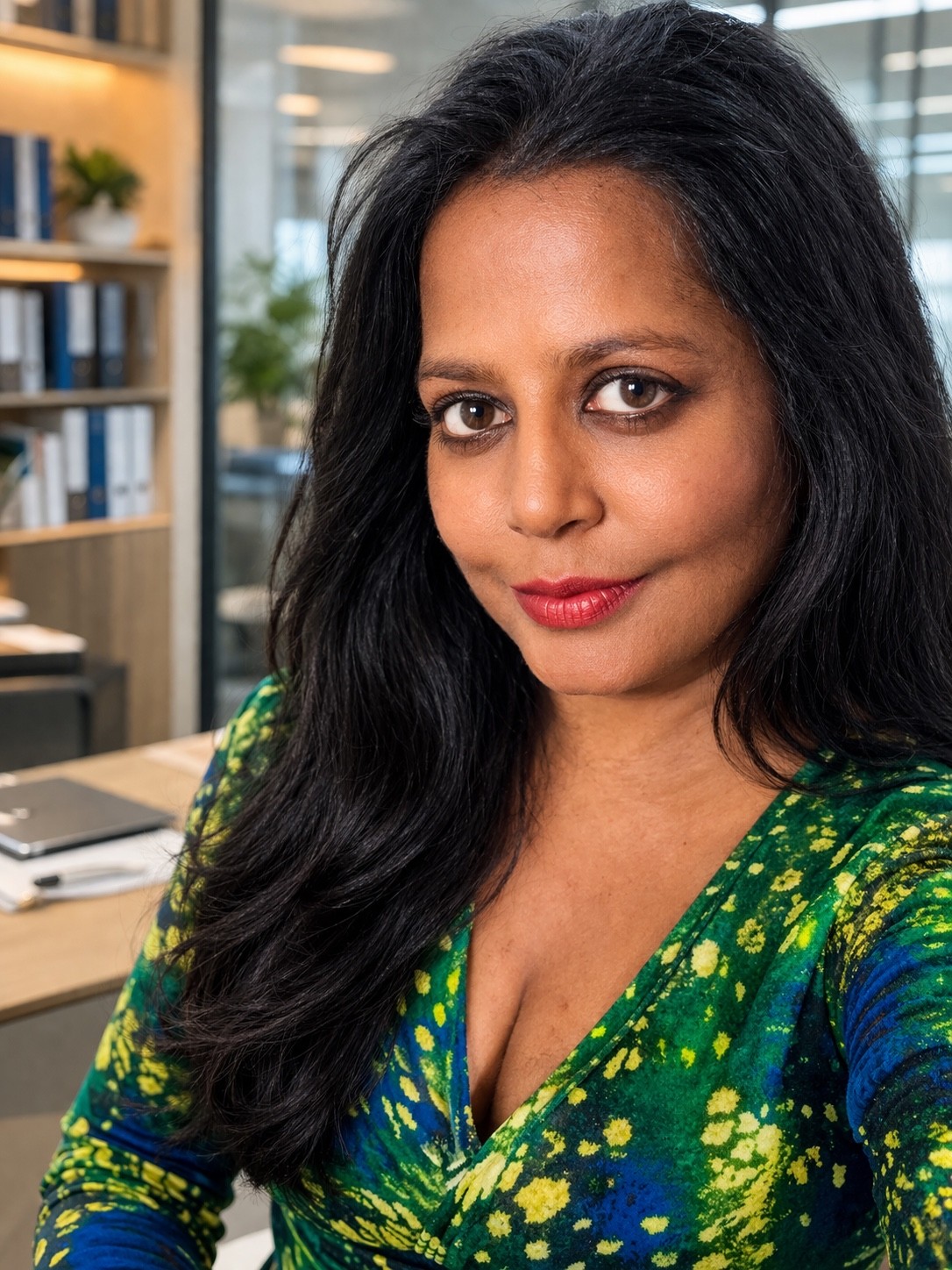
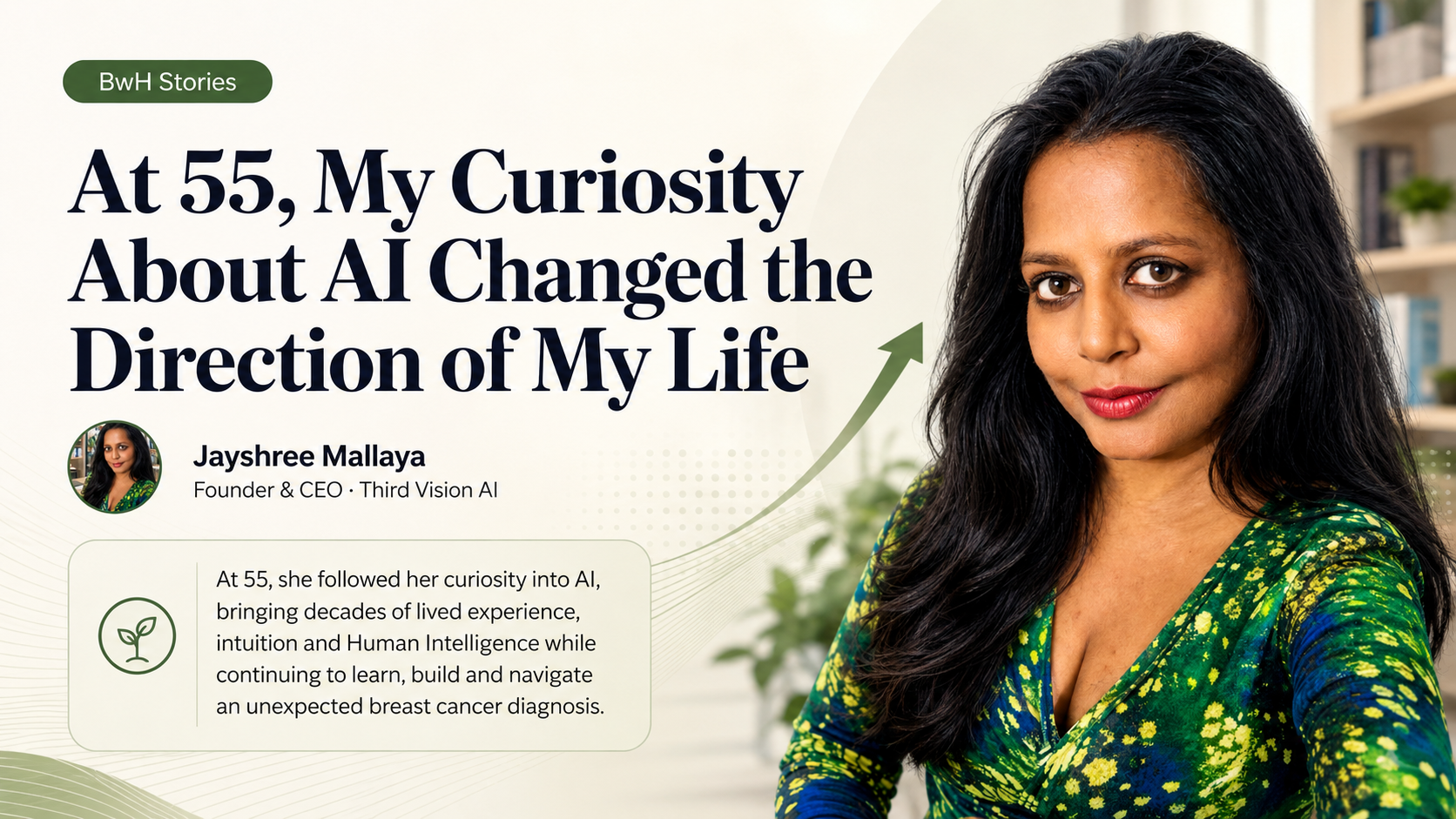
At 55, I Followed My Curiosity Into AI. It Changed the Direction of My Life.
I didn’t wake up at 55 and decide to reinvent myself.
I became curious.
Curious about artificial intelligence.
Curious about what it could do.
Curious about what might happen if I brought everything I already knew about people, business, intuition and decision-making into a conversation with a machine.
I had no idea that curiosity was about to change the direction of my life.
I didn’t come from technology
When I began seriously exploring AI in August 2025, I wasn’t a software engineer or computer scientist.
My life had taken a completely different path.
For more than three decades, I had been an entrepreneur. Alongside my sister, Mellissa Mallaya Pandya, I was one half of the Mystic Sisters in South Africa.
Our work involved books, newspaper and magazine columns, radio, television and public appearances, but underneath all of it was something that had fascinated me for most of my life:
People.
How we think.
How we recognise patterns.
How experience influences our decisions.
How intuition sometimes tells us something before we can completely explain why.
So when I encountered AI, I didn’t approach it as a technologist.
I approached it as me.
And I think that distinction changed everything.
I wasn’t afraid to think with AI
There is a lot of conversation about what AI might replace.
My experience was different.
AI began showing me the value of what I already knew.
I could ask a question, challenge the response, add context, disagree, rethink it, explore another direction and keep going.
I realised that I wasn’t using AI to replace my thinking.
I was using it to accelerate my thinking.
And something unexpected began happening.
The more I worked with Artificial Intelligence, the more conscious I became of my own Human Intelligence.
My experience mattered.
My intuition mattered.
My ability to recognise when something didn’t make sense mattered.
Even the parts of my life that didn’t look remotely technological suddenly had relevance.
That was incredibly liberating.
Because I didn’t have to become someone else to enter the AI conversation.
I could bring myself into it.
Then my questions changed
At first, I wanted to understand what AI could do.
Before long, I became fascinated by a different question:
What should AI be allowed to do?
If an AI can recommend something, access a system, trigger a transaction or eventually take an action on our behalf, being capable of doing it doesn’t necessarily mean it should be allowed to.
So who gives it permission?
Who can say no?
Who can stop it?
And who remains accountable when an AI-supported decision becomes a real-world action?
Eventually, one question kept returning:
Who authorizes AI to act?
That question changed the direction of my work.
It led me into AI governance and eventually to founding Third Vision AI.
I began developing ideas around what I now describe as Execution Governance: preserving legitimate human authority as AI becomes increasingly capable of moving from information towards action.
That work led to frameworks including HAAA™ — Human with Authority, Authorship & Accountability — and SEA™ — Sovereign Execution Authority.
But they didn’t begin because I had decided I wanted to invent frameworks.
They began with questions.
And the questions began with curiosity.
Curiosity kept opening doors
This is the part that still amazes me.
Within my first year of seriously working with AI, my world had changed.
Ideas that began in conversations with AI became research questions.
Research questions became frameworks.
Frameworks began moving towards enterprise application.
My research was accepted for presentation at the University of Basel.
I participated in the MIT AI Risk Repository Delphi study.
I became a Global Ambassador and joined the Framework Committee of the Global Council for Responsible AI.
I became a triple-nominated finalist in the SENTECH Africa Tech Week Awards.
And my company began preparing to take our governance thinking from sandbox into a real South African enterprise environment.
None of this was on a five-year plan.
A year earlier, I couldn’t have predicted any of it.
I simply kept following the next question.
And then life interrupted the story
While all of this was happening, something else entered my life.
I was diagnosed with breast cancer.
There is no elegant transition between those two sentences.
That is how life works.
One part of you can be incredibly excited about what you’re building while another part is frightened, tired or dealing with something you never asked for.
I am preparing for surgery and treatment while continuing to build Third Vision AI, write, research, mentor, collaborate and learn.
Some days I can do a great deal.
Other days my body reminds me that it has different priorities.
I’m learning to listen to both.
And perhaps this is why Tarak’s invitation to tell an unfinished story affected me.
Because mine really is unfinished.
I don’t know exactly what happens next.
Maybe we put too much pressure on middle age
There is something I have been thinking about increasingly.
Women reach their forties, fifties and sixties carrying extraordinary amounts of knowledge.
We have built businesses and careers.
Raised families.
Started again.
Lost things.
Made mistakes.
Solved problems nobody gave us a manual for.
Managed people.
Managed money.
Managed crises.
Adapted.
Survived.
Learned.
Yet somewhere along the way, some women begin believing that the most interesting part of their lives must already have happened.
Technology can reinforce that feeling.
AI can look like something belonging to a younger generation, to programmers or to people who have spent their lives working in technology.
I am evidence that this doesn’t have to be true.
You don’t have to throw away your old life
I think this is one of the greatest misunderstandings about entering AI later in life.
You don’t have to start again from zero.
You bring everything with you.
A woman in finance brings financial intelligence.
A woman in healthcare brings clinical experience.
Someone in operations knows what really happens beyond the process diagram.
An entrepreneur understands uncertainty and risk.
A leader understands people.
A woman who has spent decades navigating life brings something no AI model can simply manufacture on demand:
lived experience.
AI doesn’t make those things obsolete.
It can give us another way to use them.
That is one reason I later created Women + AI = The New Currency™.
I don’t want women simply learning how to prompt AI.
I want women to discover what happens when their existing Human Intelligence meets this extraordinary new capability.
I am still becoming
There is a temptation when telling our stories to make everything look inevitable in retrospect.
It wasn’t.
I didn’t discover AI at 55 knowing that I would found an AI company.
I didn’t ask my first questions knowing they would eventually become governance frameworks.
I didn’t begin writing knowing my research would reach international academic conversations.
And I certainly didn’t know that I would be navigating breast cancer in the middle of it all.
I still don’t know exactly where this journey ends.
But I know what began it.
Curiosity.
So if you are reading this at 45, 55, 65 or any age and feeling as though your world has become smaller than you expected, I don’t necessarily think you need to reinvent your life tomorrow.
Maybe begin with something much smaller.
Become curious again.
Follow something you don’t completely understand.
Ask the question you’ve been afraid might sound silly.
Learn something simply because it fascinates you.
Bring everything you already know with you.
Then see where the next question takes you.
At 55, I followed my curiosity into AI.
It didn’t erase the woman I had been for the previous five decades.
It helped me discover what she might still become.
And I’m still finding out.
Jayshree Mallaya
Founder & CEO, Third Vision AI
0 comments on “At 55, My Curiosity About AI Changed the Direction of My Life”
Comments from signed-in readers are published immediately. Keep it professional.
Sign in to join the conversation.