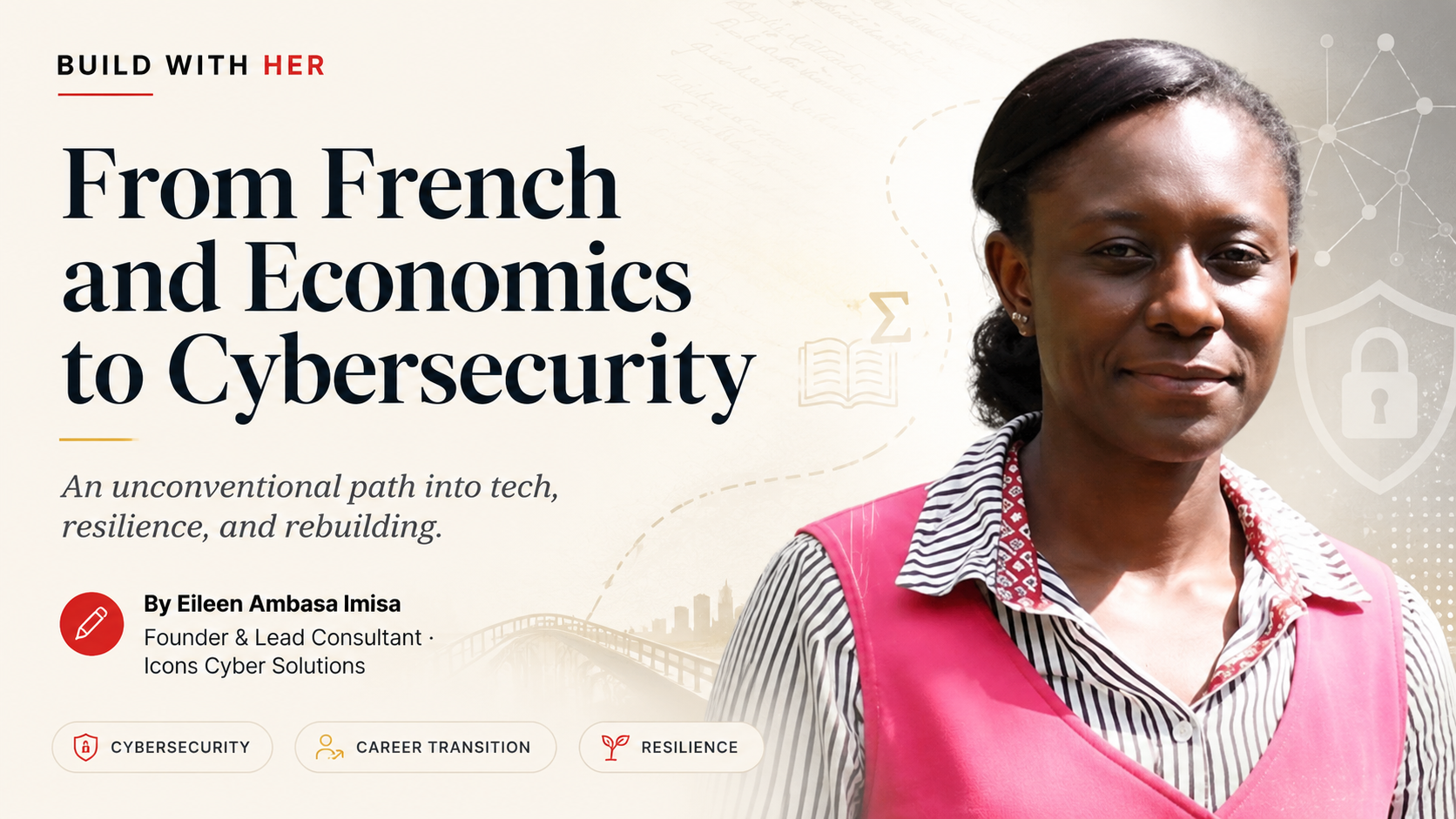
From French and Economics to Cybersecurity
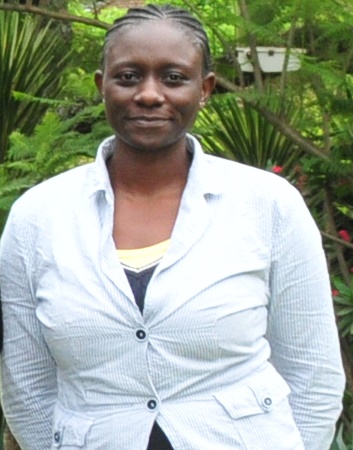
From French and Economics teacher to Cybersecurity is a personal account of an unconventional journey into technology. Eileen shares what it meant to enter a male-dominated technical environment without an IT degree, learn cybersecurity through curiosity and practical work, encounter gender bias and industry gatekeeping, build and later close a technology business, and eventually begin rebuilding. The story explores opportunity, practical learning, failure, resilience and what it takes to keep moving when the conventional path is not available.
From French and Economics to Cybersecurity
My journey into technology did not begin with a computer science degree or a network engineering background. I needed a way forward, but I had no clear career roadmap.
In 2010, I was 27, a Bachelor of Education (French and Economics) graduate, a freelance translator, a private French tutor and a mother to a one-year-old child. I had already spent three difficult years trying to secure meaningful employment. I was beginning to understand how difficult it was when your qualifications and the available jobs do not seem to converge.
Then I found a door through a Women in Technology programme at the African Centre for Women in Information and Communications Technology (ACWICT), supported by Samsung Real Dreams and Cisco NetAcad.
I walked in as a beginner, learning alongside students considerably younger than me. It was humbling. I had even struggled with an introductory computer unit at university, escaping a retake by a whisker. But I had to do this. This was the only chance I had, and I gradually discovered that I could learn it.
From Zero to One
My first placement was at a contact centre, working shifts from 3:00 p.m. to midnight. Managing that schedule while raising a toddler became extremely difficult. I quickly realized that I did not just need a job; I needed something more sustainable.
I returned to ACWICT and pursued my CCNA. That decision changed the direction of my career.
I later joined TechnoBrain as a technical instructor and found myself working in an environment dominated by people with formal IT qualifications and certifications. I did not have an IT degree, but I had a resolve to adapt and a willingness to learn.
So I learned by doing.
Whenever there was network infrastructure to lay out, I volunteered. When equipment needed checking, I was there. When something needed troubleshooting, I wanted to understand what had gone wrong and how to fix it. In my department, there were only three women, and I was often the only woman involved in the hands-on technical work.
From this experience I learnt something I hold throughout my career: Technical confidence is built through experience, not permission.
You take the first step, ask questions, make mistakes, solve problems, learn from them, and confidence follows.
Finding Cybersecurity
As my technical knowledge grew, I became curious about cybersecurity, then, I noticed a gap. There was no dedicated cybersecurity function within the organization.
I began studying CISSP and CISA material independently. Then I discovered the Certified Ethical Hacker pathway and became deeply interested in ethical hacking, digital forensics and penetration testing. I built virtual laboratories, experimented, studied and practised.
I went on to earn CCNA Security, CEH, CHFI and ITI certifications, and was eventually recognized as an EC-Council Champion in the organization. I progressed from trainer to Senior Trainer and later Assistant Training Manager.
Looking back, curiosity has probably been one of the most important forces in my career. Whenever I encountered something I did not understand, I wanted to learn it. Whenever I saw a gap, I wanted to understand why it existed and whether I could help close it.
Working in Rooms Where Women Were Few
The mid-2010s technology landscape had little of today's structured conversation around women in STEM. I was often the only woman working among male colleagues in different technical assignments. I learned to adapt quickly, but I also encountered the quiet, persistent resistance of working in a field that was not yet accustomed to seeing women as technical professionals and leaders.
When I was selected for a career opportunity in Rwanda, a senior manager attempted to block my progression and demote me. Headquarters eventually intervened and confirmed my appointment as Assistant Training Manager and Operations Manager, making me the second woman manager in the TechnoBrain group.
There was also an issue with how my work was valued. I was earning less than some of the male managers, and the General Manager constantly reminded me how I was being paid a lot of money. I refused to sign one of my appraisals until the matter was reviewed, and it eventually required intervention from headquarters to resolve it.
These experiences taught me that sometimes the barrier to a woman's progression is not her ability, but someone else's assumption about her ability and the value of her contribution.
Years later, in 2020, I encountered another form of bias. During a technical operation that required overnight, on-site work, I was automatically excluded and relegated to working remotely.
Nobody asked whether I was available. Nobody asked whether I was capable.
The decision was simply made for me.
That changed my understanding about inclusion. “Getting women through the door is important, but it is only the beginning.
Inclusion also means trusting women with responsibilities, asking whether they are willing and able to take on an assignment, and allowing them to decide what they are capable of doing.
Gatekeepers of the “New” Frontier
Around 2013 and 2014, cybersecurity in Kenya was still developing. Alongside the growth of the field, I encountered a small circle of people who seemed to be the “guards” of the space.
At some meetups and talks, they assumed that everyone was either a university student or a novice just discovering cybersecurity. I remember speakers pointing to one woman from their circle, who worked in IT governance, and describing her as the only woman in cybersecurity in Kenya.
I would sit there wondering: Why make such declarations when some of us are already in the room, studying and practising ethical hacking and digital forensics?
I knew several other women I had trained who were also building their careers in the field.
I watched a young industry trying to decide who belonged, what counted as expertise and how people were supposed to acquire it.
Standards do matter. However, when they are centered around individuals and their opinions, they strip away opportunity and turn into gatekeeping.
There was also a tendency to complicate entry requirements, dismiss certifications and insist that only highly specialized skills mattered. The field was sometimes presented as though certain skills could only be mastered by a select few.
When I introduced myself as a CEH, CHFI and CCNA Security professional with a Bachelor of Education, the response was not always encouraging. There were condescending remarks and comments that certifications would not take us far.
The contradiction troubled me.
If you were new, you did not know enough. If you had credentials, they were dismissed as insufficient. When some of the same people obtained certifications themselves, they set the bar so high for new entrants. Fresh graduates could be expected to have a long list of certifications, and demonstrate technical capabilities that realistically required exposure to enterprise systems they had never had the opportunity to work with.
I remember asking a colleague in frustration:
"Who was born knowing?
How do you expect someone to prove live-system expertise when you refuse to give them the chance to step into the field?
What happened to learning on the job?"
The Real Classroom Is the Work
Cybersecurity cannot be learned entirely from a textbook or certification syllabus. Training provides the foundations and controlled environments for practice, but much of the deeper learning happens when you encounter a real problem.
You do not necessarily become an expert and then conduct your first audit. You conduct the audit, encounter vulnerabilities you did not anticipate, investigate them, research what you do not know and learn from the process.
A difficult penetration test teaches you something. A forensic investigation exposes questions you had not considered. A technical problem is a lesson for your next assignment.
That is how I learned.
Certifications gave me structure and a foundation. Training gave me concepts and controlled environments. But the work itself , was yet another classroom.
This is why I believe people entering cybersecurity need both standards and opportunity. If we demand experience before giving people the opportunity to gain experience, we create a cycle that keeps new talent outside the profession.
And for women, who are already underrepresented, every unnecessary barrier narrows that door further.
Building, Falling and Rebuilding
In 2013, I moved into consultancy and began building Icons Cyber Solutions. In 2015, I was one of 1,000 African entrepreneurs from more than 20,000 applicants selected for the inaugural Tony Elumelu Entrepreneurship Programme across the continent, where I gained skills and exposure to develop the business further.
We secured and delivered technical projects, and I learned a lot about running a technology business.
But entrepreneurship does not always go as imagined.
By 2019, I made the tough and painful decision to stop active operations and move into individual consultancy.
I became part of the SME statistic of businesses that do not make it to the five-year mark, and at the time, that was devastating.
Today, I see it differently. I learned about markets, clients, business structures, leadership, risk and, perhaps most importantly, what I would do differently if I built again.
A business can close without it being necessarily a failure. Sometimes you have to stop, learn from what happened and decide what's next.
The Chapters That were not Technology
When the business paused, another part of my professional life opened up. I returned to teaching, this time working with Cambridge International students in Global Perspectives, Economics, History, Geography, Sociology and languages.
I continued writing, translating technical material, preparing reports and proposals, and working as a ghostwriter and editor. In 2025, after years of helping other people put their ideas into words, I published my own book, The Empath's Edge.
These may seem like fragmented series of detours, but I see them as structural layers
· Languages and writing taught me how to articulate ideas.
· Economics taught me to think about systems, policies, incentives and decisions.
· Teaching helped break down complex ideas.
· Cybersecurity taught me to think about risk.
· Digital forensics taught me to follow evidence.
· And Project management taught me structure and delivery.
None of those skills were wasted. They were layers of the same professional journey.
Building Again
Today, I am rebuilding Icons Cyber Solutions, but I am not trying to recreate the business exactly as it was.
I am applying what I have learned from the market, clients, projects, mistakes and years of working independently. Cybersecurity remains central, but our thinking has become broader, incorporating governance, risk, organizational and project resilience, ethics, integrity and capacity building.
This time, I am also building with a stronger team and a better understanding of what it takes to create something that does not depend entirely on one person.
The first business taught me what I did not know. Consultancy taught me what organizations actually need. Experience taught me that a founder does not have to do everything alone.
Take Your Place
If you are a woman entering the space from a non-traditional background and wondering whether you belong, remember this:
We do not have identical roadmaps, times and seasons also change, pick the lessons that apply to you, your journey and your personality, and work with them. More importantly, be curious, be ready to work and be available.
Do not let corporate gatekeepers turn your unconventional background into a liability. It is your ultimate asset. A room full of identical computer science degrees will always yield identical thinking. Your unique lens, from whichever field, allows you to see structural risks and systemic vulnerabilities that traditional operators completely miss.
You are allowed to pivot, to pause, to fail and to rebuild. Your initial career does not have to be your last. Take the first step with the tools you have, learn what you do not know and, when the floor drops beneath you, pick up the pieces and build again.
And perhaps most importantly, do not let other people's perceptions become your perception of yourself.
If my journey from a trained teacher to a cybersecurity founder and author has taught me anything, it is this:
Careers never differentiate between male and female; people do. Technology does not lock you out because of your gender; people's perceptions can.
People create barriers. People create assumptions. But people also create opportunities. You cannot control every perception or every barrier you will encounter, but you can decide whether those perceptions become the limits of your ambition.
Take the work seriously. Take yourself seriously. Take the opportunities when they come, and when a door is closed, find another way in.
Take it head-on. Learn. Work. Build. And soar.
0 comments on “From French and Economics to Cybersecurity”
Comments from signed-in readers are published immediately. Keep it professional.
Sign in to join the conversation.