I Taught Kids About Cybersecurity and They Taught Me Something Too
Teaching children about online safety and cyberbullying left me with a reminder that cybersecurity is not just a profession, it is a responsibility every tech professional owes their community.

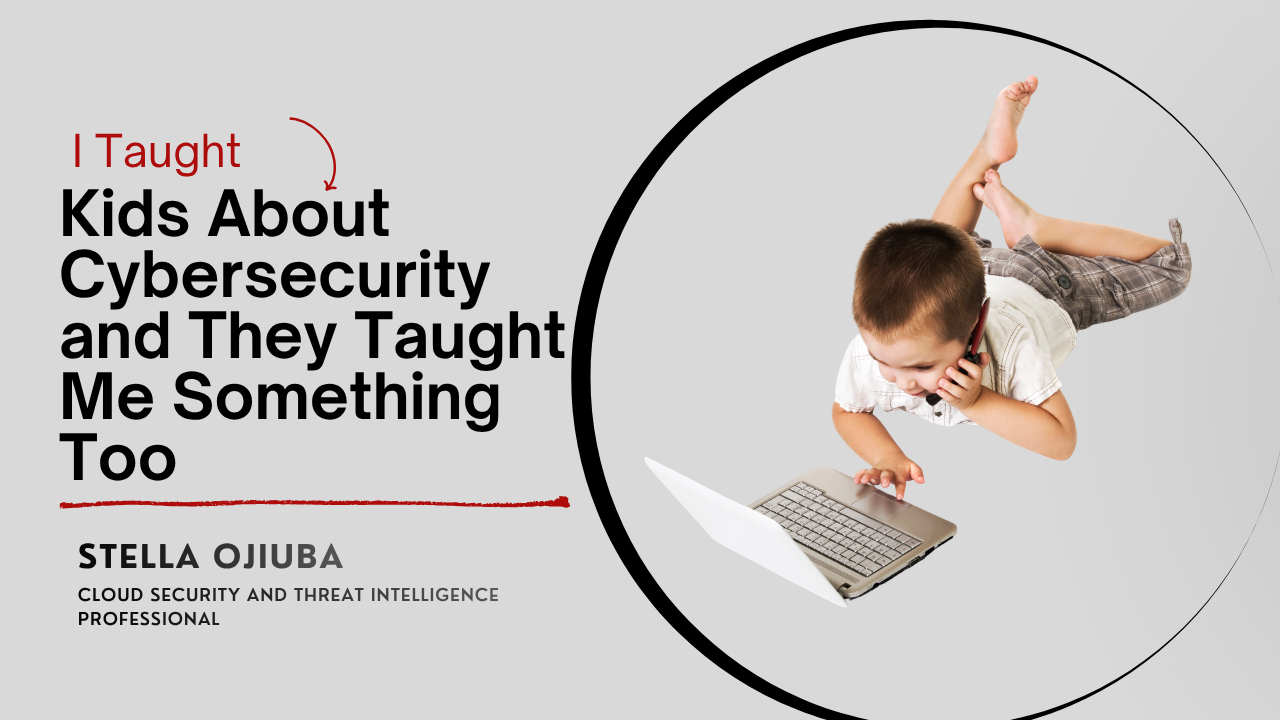
Somewhere between explaining what a password is and watching a nine year old confidently tell me that sharing your school name online is dangerous, I realised something important. Cybersecurity is not just a career, It is a responsibility.
Why I Did It
I looked around at the world children are growing up in and felt unsettled by what I saw. Kids today are online earlier than ever, they have smartphones before they have the judgment to know what to do with them, they are navigating social media, online games, messaging apps, and the entire internet often without a single adult in their life who has talked to them about what danger looks like in a digital space.
Yet in most schools across the world, digital safety is not part of the curriculum. Children are taught to read, to write, to solve equations but nobody is teaching them that sending your home address to a stranger online is the digital equivalent of opening your front door to one. That gap bothered me enough to do something about it.
What We Covered
I designed the session around two things I knew were most relevant and most urgent for children this age: online safety and cyberbullying.
Staying Safe Online: I started with the basics because the basics are where most of the real danger lives. We talked about what personal information actually means. Not just your name, but your school name, your neighbourhood, your daily routine, the name of your best friend, photos of your home. Children are often shocked to realise that a stranger online can piece together exactly where to find them from the kind of information they share freely every day.
We talked about passwords. Why "password123" is not a password. Why using your birthday or your pet's name is a risk. We did a simple exercise where I asked them to think of a password nobody could guess and the creativity in that room was remarkable. We also talked about links, about what phishing looks like when you are 10 years old, a fake game download, a prize notification, a message that says "click here to get free gift." Children are targeted by cybercriminals too, and they deserve to know it.
Cyberbullying: This was the part of the session that surprised me most not because of what I taught, but because of what the children already knew.
The moment I introduced the topic, hands went up. Stories came out, not all of them their own, but enough to make clear that cyberbullying was not a theoretical concept to these kids. It was something they had seen, experienced, or witnessed happening to someone they knew.
We talked about what cyberbullying actually is, that it is not just name calling online, but exclusion, screenshots shared without permission, fake accounts, and the particular cruelty of things said behind a screen that would never be said face to face. We talked about what to do when they find themselves in that situation. Tell a trusted adult, do not respond, screenshot and report, block without guilt. And we talked about something I think gets missed in most of these conversations, the responsibility of the bystander. If you see it happening to someone else and you stay silent, you are part of the problem, that landed hard in the room in the best possible way.
What the Kids Taught Me
I went into that school thinking I was the one doing the teaching. I left knowing that was only half true. The questions those children asked were some of the sharpest, most genuine questions I have ever been asked about cybersecurity. Not "what is the OSI model" or "explain zero trust architecture" but questions that cut straight to the heart of what this field is actually about.
"If someone is being mean to me online, does that mean they are a bad person in real life too?"
"What if the person bullying me is my friend?"
"How do I know if a website is safe?"
"Can hackers see me through my camera?"
These questions reminded me why cybersecurity exists in the first place, its not just to protect systems but also to protect people.
Why This Matters Beyond the Classroom
There is a version of a tech career that is entirely inward facing. You learn, you certify, you get hired, you do the work and that is legitimate. But I believe the people who build the most meaningful careers in tech are the ones who also look outward. Who ask not just "how do I grow?" but "who else can grow because of what I know?"
Children in schools across the world are not going to wait for governments to add digital literacy to the curriculum. They are online right now, they are being targeted right now and they need someone to show up and explain the world they are already living in. That someone can be you. You do not need to be a certified cybersecurity expert to teach a child that their password should not be their birthday. You do not need to be a senior engineer to explain to a teenager that a screenshot can travel further than they think. You just need to know a little more than they do and care enough to show up.
Cybersecurity Belongs to All of Us
We talk about cybersecurity as though it is a professional discipline something that belongs in boardrooms and server rooms and job descriptions. But cybersecurity is also a neighbourhood conversation, a school visit, a parent sitting with their child and saying "let me show you what to look out for."
Every person reading this who works in tech, who is studying tech, who is transitioning into tech you already know things that the people around you need to know. The child in your community who is spending four hours a day online. The parent who does not know what their child is accessing. The teenager who has already been cyberbullied and does not have the language to name what happened to them.
Give back what you know. It costs you a day and it could change everything for someone.


0 comments on “I Taught Kids About Cybersecurity and They Taught Me Something Too”
Comments from signed-in readers are published immediately. Keep it professional.
Sign in to join the conversation.