Building People Before Building Business
What does it take to build a Learning and Development function from the ground up and transform it into a globally recognized strategic business division? In this personal account, Sherol D'souza reflects on her journey of helping shape an enterprise learning culture across more than 50 countries and 300 offices worldwide. From overcoming resistance to online learning to leading an award-winning division, she shares the leadership lessons that mattered most: the power of reflection, trust, delegation, humility, and the belief that the greatest legacy of any leader is not the systems they build, but the people they help grow.

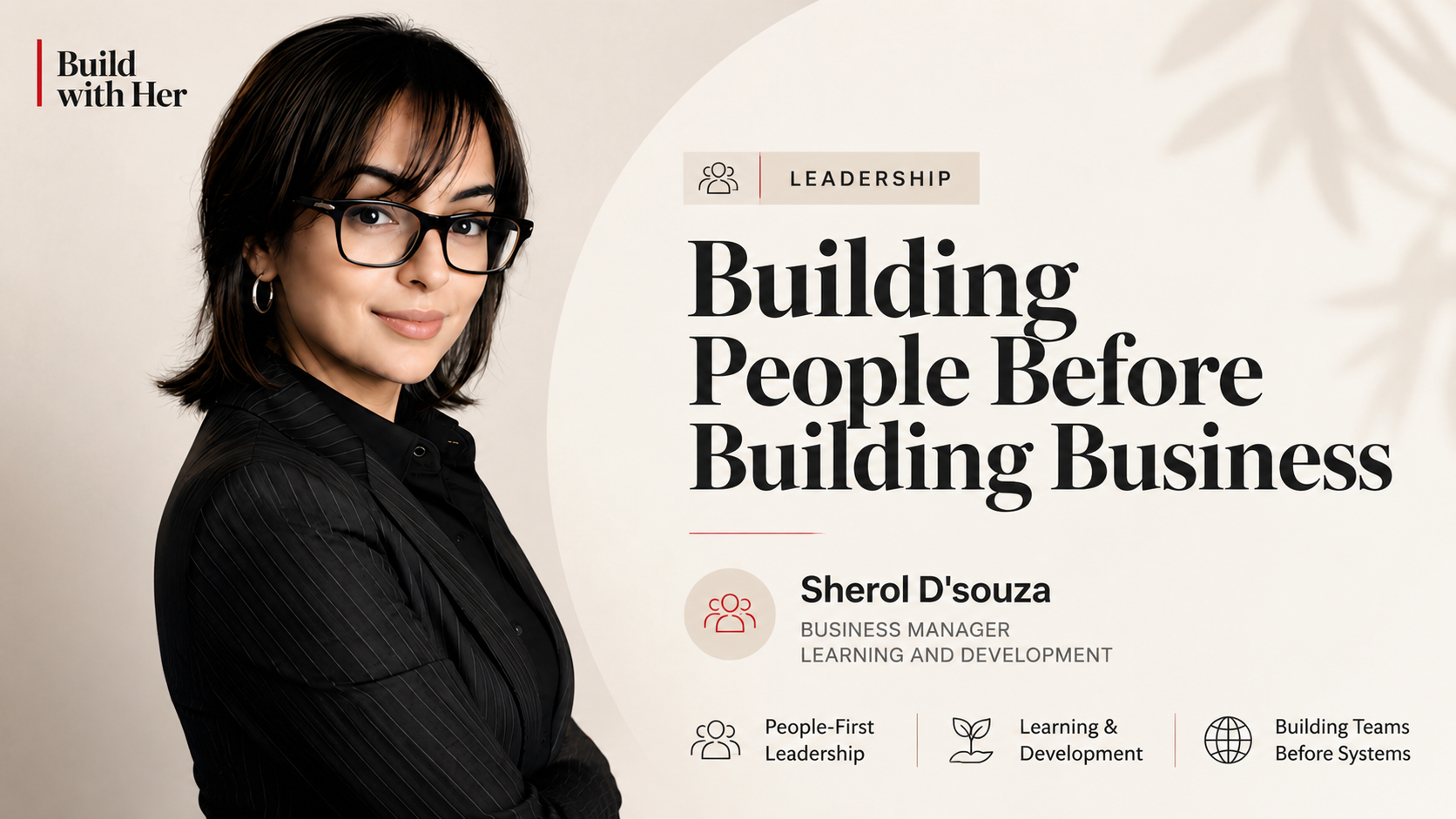
It was at a very early stage in my corporate journey when I was given an opportunity that would shape the rest of my career.
The organization had ambitious goals, operated across multiple countries, and employed people from a wide range of cultures, backgrounds, and generations. What it did not have was a structured Learning and Development function. There were training initiatives here and there, but no central strategy, no long-term vision, and no framework that connected learning to business performance.
I was brought in as part of the inception team (just the 4 of us), building one from the ground up.
Looking back today, I realize that my greatest challenge was never creating learning programs. It was changing mindsets.
At that time, online learning was still unfamiliar to many employees. Understandably, some preferred traditional classroom environments, while others questioned whether digital learning could ever be effective. Different age groups had different expectations, different cultures had different approaches to learning, and different operational functions required completely different solutions.
One-size-fits-all simply wasn't an option.
Rather than trying to force change, I spent time understanding the people behind the resistance. I listened more than I spoke. I visited operational sites globally, spoke to employees across departments, and tried to understand not just what they needed to learn, but HOW they learned best.
That became the foundation of everything we built.
Over time, what started as a small function evolved into a complete Learning and Development ecosystem. We designed onboarding programmes that helped new employees feel connected from day one and developed capability-building initiatives for operational teams that directly supported business performance. Leadership development became a priority, introducing coaching programmes that equipped managers to lead with confidence rather than simply supervise.
However, the objective was never to deliver training. It was to create a culture where learning became part of everyday work. An enterprise level model, built into work flows and daily duties.
As the division matured, it evolved into a strategic business function that supported the group operating across more than 50 countries and over 300 offices worldwide. As the organization continued to grow globally, so did the division. What began as an idea became a strategic business function that supported employees throughout every stage of their careers. As it continued to expand its reach and impact, the board appointed me to head the division at the Group level, driving both its strategy and execution while ensuring learning remained aligned with the organization's long-term vision.
One of the proudest moments in that journey was seeing the organization receive internationally recognized awards for its commitment to people development and workplace learning. Standing at an award ceremony in Greenwich, watching years of work being recognized on a global stage, was both humbling and deeply rewarding. It was never about collecting trophies. Those awards represented something far more meaningful… it was validation that investing in people creates lasting business impact.
Very soon, industry publications and international features began highlighting the organization as an example of a company that genuinely invested in its people. It demonstrated that Learning and Development was no longer viewed as a support function. It had become a strategic driver of organizational success, which even caught the eye of several global customers.
But if there is one lesson that I’ve learned above everything else, it is this: good leadership isn't just about getting the job done. It's about helping people become the best version of themselves.
As the division grew, I came to realize that building great people starts with creating the right environment. It's about creating a culture where people feel trusted, valued, challenged, and empowered to grow, take ownership, and bring their best every day.
One leadership habit has stayed with me throughout my career, and I treat it as a non-negotiable part of my day.
Every day, I make time to step away from the noise. Sometimes it's a simple walk. Other times it's a trek out into nature or maybe just drive to the desert. It's my chance to slow down, clear my mind, and reflect before the day gets ahead of me.
Those moments aren't about finding answers. They're about creating space to think.
Before offering direction, before giving feedback, before making decisions that affect others, I ask whether I have led myself well first. Could I have communicated better? Have I listened enough? Have I created clarity? Am I leading from humility rather than ego? I told myself constantly…good leadership begins with self-awareness. Walking the talk. Being a model of excellence.
I've found that some of the best leadership lessons don't come from sitting behind a desk. They come when the mind is quiet and there are no distractions.
When leaders consistently evaluate themselves before evaluating others, they create cultures built on trust instead of fear.
Another lesson took me a little longer to learn.
Early in my career, I thought being a good leader meant having all the answers and staying closely involved in every important decision. It felt like the right thing to do. But over time, I realized it was holding both me and my team back. The more I learned to delegate and trust others, the more my team grew and thrived.
Delegation is often misunderstood as simply assigning work. It is much more than that. True delegation gives people ownership and it gives you a moment to step back and reflect. It gives them space to make decisions, solve problems, and learn through experience, while allowing you to watch their confidence, skills, and potential unfold. It shows them that you trust their judgment and believe in their ability to succeed.
When people feel trusted, they begin contributing because they WANT to. That shift changes everything!
Ownership creates accountability. Accountability creates excellence and excellence creates culture.
Over the years, I've come to believe that an organization can only grow as much as its leaders do. Processes can be improved, systems can be updated, and technology will always change, but good leadership is what inspires people to show up every day, give their best, and help the business move forward. And to be a good leader means to practice discipline. It requires constant learning, self-awareness, continuous reflection, and the willingness to adapt long after experience tells you that you know enough.
Most importantly, it requires humility.
Humility allows leaders to listen before speaking. To learn before teaching. To admit mistakes before assigning blame. To celebrate the success of others without needing recognition themselves.
Remember…titles may earn authority, but humility earns trust.
And in the end, trust is the foundation upon which every successful team, every resilient culture, and every great organization is built.
When I look back at my younger self who was asked to be part of a project that would influence many, I don't think about the programmes we created or even the awards we received. I think about the people whose confidence grew, whose careers progressed, and who discovered capabilities they didn't know they possessed.
Because the greatest legacy of Learning and Development is not the courses we build. It is the people we help build. And the journey continues.



0 comments on “Building People Before Building Business”
Comments from signed-in readers are published immediately. Keep it professional.
Sign in to join the conversation.