After the Ceasefire: Who Guards the Records?
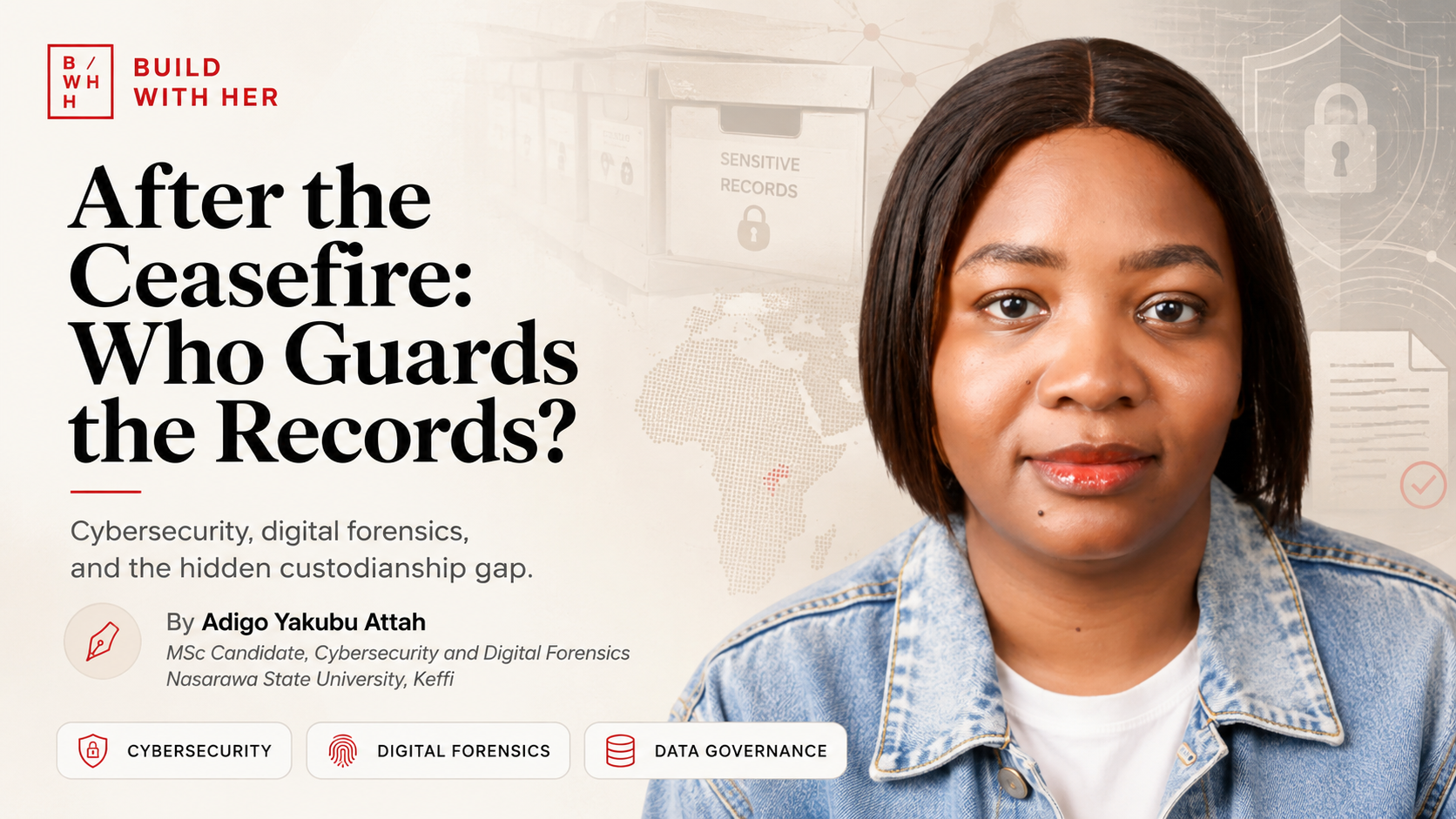
A records room led Adigo Yakubu Attah to ask a question she found institutions rarely address head-on: what happens to sensitive data once the urgency of conflict has passed? 'After the Ceasefire' traces the hidden custodianship gap in African peacebuilding, and the women left most exposed by it.

The Records Room
There is a particular kind of silence that settles over a records room. Boxes of files, some decades old, holding the quiet institutional paperwork of an organization built around peace work. I was not digitizing ceasefire agreements or classified peace records. My task at the ECOWAS Peace Fund was more ordinary: helping digitize more than twenty thousand institutional records as part of the organization's day-to-day operations.
But it was in the middle of that ordinary work, sorting, scanning, and indexing file after file, that a much larger question began to take shape in my mind: what happens to a record after the conflict it relates to has ended? Who is responsible for keeping it safe, and for how long, once the urgency of the moment has passed?
"What happens to a record after the conflict it relates to has ended? Who is responsible for keeping it safe, and for how long, once the urgency of the moment has passed?"
In my experience, it is a question that gets less attention than it deserves. Peace processes generate some of the most sensitive data on the continent - names of informants, locations of displaced communities, accounts of gender-based violence and details of disarmament negotiations. Yet in my experience, the frameworks that govern who holds this data, who can access it, and what happens to it once a mission ends or a mandate expires are often improvised rather than designed.
Digitization Without Custodianship Is a Half-Finished Job
Across regional and international peacebuilding institutions, digitization has largely been treated as a technical upgrade: move paper into a database, make records searchable, reduce physical storage costs. What is missing, far more often than not, is the second half of that project - a clear custodianship model that answers basic but consequential questions. Who owns the data once an organization's mandate in a country ends?
What happens to records when funding cycles shift, when institutions restructure, or when political will changes? Who is accountable if a breach exposes the identity of someone who testified in confidence?
These are not hypothetical concerns. Peace-process data frequently outlives the missions that created it, and it frequently outlives the political conditions under which it was safe to collect.
"A record that was harmless to disclose in 2015 can become dangerous in 2026 if the balance of power in a region shifts."
Custodianship, in other words, is not a one-time decision. It is an ongoing obligation.
The Gendered Dimension of the Records
This is where the custodianship question becomes, unavoidably, a gender question. Women feature disproportionately in the most sensitive categories of peace-process records: as survivors of conflict-related sexual violence, as informal negotiators and community mediators whose contributions are rarely formalized, and as the subjects of humanitarian case files. When institutional custodianship is weak, it is these records, and the women behind them, that carry the greatest exposure.
My continuing research asks how the adoption of cybersecurity frameworks by African and international peacebuilding institutions actually translates into protection for the people named in their records.
"A framework adopted on paper is not the same as a framework enforced in practice."
And the gap between the two tends to fall hardest on those with the least institutional power to demand accountability.
Toward Real Custodianship
Addressing this gap does not require reinventing peacebuilding institutions from scratch. It requires treating data custodianship as core mission work rather than a back-office afterthought.
What real custodianship looks like:
Naming a clear, accountable custodian for sensitive records at the point of collection and not years later
Building retention and disposal policies that survive changes in funding or leadership
Auditing who has access to digitized archives, and why
Recognizing that the security of a peace record is inseparable from the security of the person it describes
Peace is often measured by ceasefires signed and mandates completed. But peace is also built, quietly, in how institutions handle the paper trail of the people who lived through the conflict.
"If we want African peace processes to be trustworthy, the records they generate have to be trustworthy too - protected not as an afterthought, but as part of what peace actually means."
0 comments on “After the Ceasefire: Who Guards the Records?”
Comments from signed-in readers are published immediately. Keep it professional.
Sign in to join the conversation.