Beyond the Curfew and the Classroom: My Fight for Rights, Faith, and Future
A personal reflection tracing a young woman's journey from a conservative village in Haryana to completing her Master's degree. It connects lived experiences of local social surveillance with global perspectives in International Relations, Islamic history, and the continuous battle against systemic patriarchy.
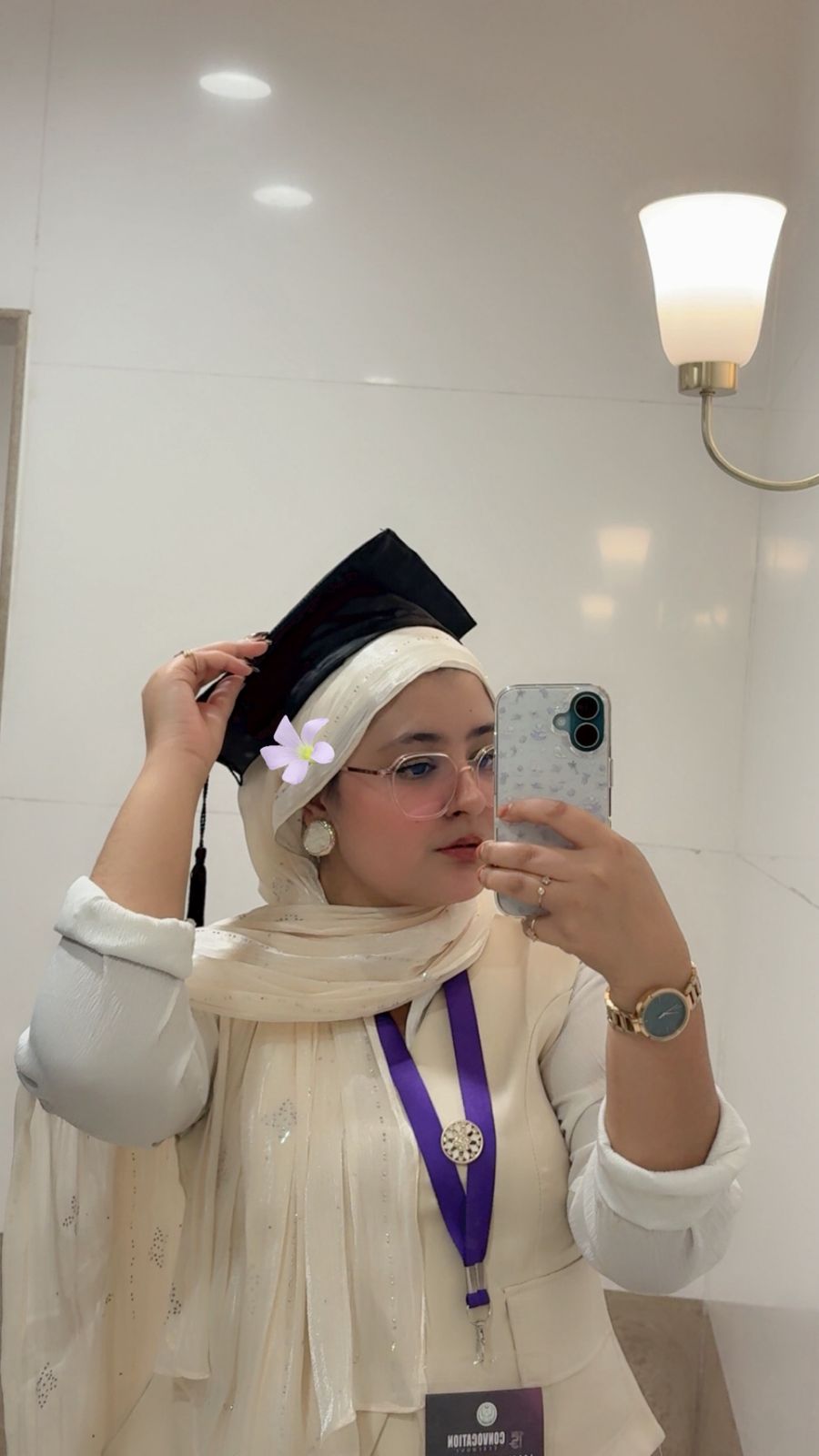
Beyond the Curfew and the Classroom: My Fight for Rights, Faith, and Future.
The story of women isn't something trapped in a dusty history book; it’s messy, breathing, and built from the friction of everyday life. Growing up in the heartland of Haryana, I learned early on that being a daughter here means navigating a landscape built on contradiction. Born in 2003 into a Muslim family, my arrival sat right at a cultural crossroads. Haryana carries the heavy, dark shadow of having one of the highest rates of female foeticide—the brutal, illegal termination of a fetus simply because it’s a girl. Inside my home, though, it was different. My family welcomed me with grace, holding true to the Islamic belief that a daughter is a blessing, a rehmat. But step outside our front door, and the village air instantly shifted to a quiet, suffocating grief: just a girl.
At the center of it all is patriarchy—not as some vague textbook word, but as an active, breathing machinery designed to keep control over a woman’s body, choices, and voice. In places like Haryana, that control wears a very familiar mask. For our grandmothers, the battles were fought behind closed doors, swallowed down in silence as they worked endlessly without recognition. They chipped away at those walls with quiet grit. But when my generation tries to push past those walls entirely, patriarchy just changes its clothes. It stops locking doors and starts locking minds through constant surveillance and psychological pressure.
By the time I hit my teens, my world shrank overnight. Even though school was accessible, my education didn't feel like a right; it felt like a favor I was supposed to bow down and thank people for. Suddenly, there was an invisible curfew on my existence: keep your head covered, keep your eyes glued to the floor, don't laugh too loud, don't talk back to elders. If I held a phone for a second too long or accidentally caught someone’s eye on the street, my character was dragged through the mud. High school didn't end with celebration; it ended with an exhausting war just to step foot into a college classroom, fighting off whispering neighbors and a local mindset that sneered, "Why let her study? Who's going to marry her?"
The double standard was glaring. While I had to beg and plead for the simple permission to study, my brother received unconditional love, cheering, and full financial backing to pack his bags and pursue his Master's in Poland. That was the moment my personal fights started bleeding into my academic life. Studying International Relations taught me to look at the macro level—to see how power structures, diplomacy, and global politics shape the invisible cages women live in across the world. Whether it's women navigating the tightrope of tradition and modernization in India, or driving economic shifts in West Asia, or breaking corporate glass ceilings in the West, the map changes, but the core struggle is identical.
That realization deepened when I leaned into Islamic history and studies. Looking at pioneering figures like Khadijah bint Khuwaylid—an independent, fierce international merchant—or Aisha bint Abi Bakr, a political leader and scholar, I realized that female agency and economic independence aren't modern Western trends; they were foundational. True Islamic teachings stand firmly against the cultural gatekeeping that tries to shrink a woman's potential. Real freedom starts with an education and a paycheck of your own, because financial independence changes the entire gravity of a household.
Finishing my Master's degree in May 2026 completely rewired how I see the world. Higher education gives you language; it teaches you human rights and the audacity to call out wrong when you see it. I realized the things I was fighting for—having an Instagram account, choosing my own path, speaking my mind, having male colleagues—weren't radical demands. They are guaranteed by both the Constitution of India and authentic Islamic jurisprudence. Yet, whenever I refuse to back down, the weaponized sentence comes flying back: "Yahi hota hai zyada padhane-likhane ka natija!" (This is what happens when you educate a girl too much! She's ruined. Just get her married.)
And then there is Gen Z. Watching this younger generation is refreshing. They aren't just begging for a chair at an old, broken table anymore—they're looking at the table and asking why it was built to exclude people in the first place. Growing up online means they face a whole new beast of toxic digital subcultures and the "manosphere," but they use those exact same digital tools to push back, build communities, and set hard boundaries. They are ditching the exhausting "have it all" burnout culture and choosing mental peace over perfection.
Of course, looking at how far we've come doesn't mean ignoring the road left. Women across the globe are still fighting systemic violence, the gender pay gap, and the invisible weight of unpaid domestic labor. Patriarchy just evolves. Today, standing right at the threshold of my career while my family pushes for marriage and tries to slam the door on my ambitions, I know the battle is far from over. They tell me that speaking up for my rights is a sin. But staying silent in the face of what is right feels like a much heavier crime against the soul. This isn't just a women's story—it's a human story about the right to exist, to learn, and to leave a mark on the world on our own terms.
Comments
Loading comments…