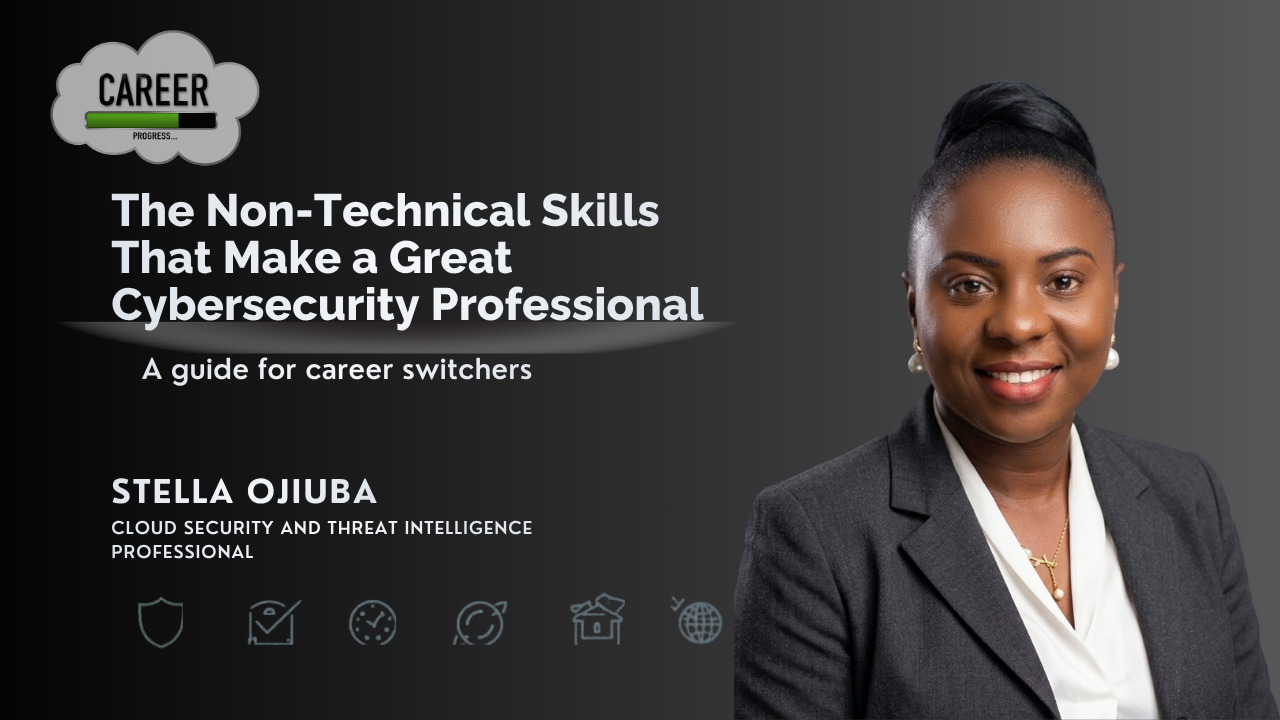
The Non-Technical Skills That Make a Great Cybersecurity Professional — A Guide for Career Switchers
This article breaks down the five non-technical skills that security teams desperately need and shows career switchers exactly where those skills fit in the industry.
Everyone told me cybersecurity was for the coders, the hackers, and the people who grew up taking computers apart just to put them back together again.
Nobody told me it was also for the communicators, the planners, and the people who can walk into a room full of panicking stakeholders and calmly explain what just went wrong and how to fix it.
Spoiler alert: those people are in high demand, and there is a good chance you are already one of them.
There is something the cybersecurity industry is quietly dealing with. There are plenty of brilliant technical professionals who struggle to explain a security incident to a non-technical CEO, write a risk report that actually gets read, or align a team on a response plan when everything is on fire.
That gap is where career switchers thrive.
If you are coming from project management, operations, communications, teaching, healthcare, or any role where people and processes were your responsibility, know this: you are not behind. You already hold skills that technical teams genuinely need.
Let me show you exactly what those skills are.
5 Non-Technical Skills That Cybersecurity Actually Needs
1. Communication
Security teams deal with high-stakes situations every day: breaches, vulnerabilities, compliance failures, executive decisions, and incident response coordination. Someone has to translate technical details into language that boards, clients, regulators, and leadership teams can actually understand and act on. If you have ever written a project report, briefed a senior leader, or explained a complex issue to someone with zero context, you have already done this kind of work.
In cybersecurity, this looks like writing incident reports, presenting risk assessments, training staff on security awareness, and communicating policy changes across an organization.
2. Risk Management
Every project manager or operations lead understands risk management. You identify what could go wrong, how likely it is, how severe the impact could be, and what actions should be taken to reduce that risk.
Cybersecurity risk management follows the exact same logic. The risks simply have different names: threats, vulnerabilities, attack vectors, likelihood, impact, and mitigation. If risk thinking is already part of how your brain works, you are closer to cybersecurity than you realize.
In cybersecurity, this looks like conducting risk assessments, building governance frameworks, advising leadership on acceptable risk levels, and prioritizing security investments.
3. Attention to Detail
Security breaches often happen because of something small: a misconfigured setting, an unpatched system, or a phishing email that almost looked legitimate.
Spotting the thing that does not belong, that quiet and methodical way of thinking, is a skill. It is not just a personality trait. If you are the person who catches errors before they become problems, reads the fine print, or notices when something feels slightly off, that instinct is incredibly valuable in security.
In cybersecurity, this looks like reviewing system logs, auditing access controls, analyzing suspicious activity, and validating security configurations.
4. Process Thinking
Cybersecurity runs on processes: incident response plans, change management procedures, access control workflows, compliance checklists, and escalation paths.
Someone has to design those processes, document them clearly, and make sure teams actually follow them. If you have spent time improving workflows, writing SOPs, running process reviews, or building operational systems, you already understand a large part of how security organizations function.
In cybersecurity, this looks like developing security policies, building incident response playbooks, designing onboarding security procedures, and improving compliance operations.
5. Calm Under Pressure
A security incident is rarely calm. Systems may be down, data may be compromised, leadership wants answers, and the clock is running.
The person who can stay focused, communicate clearly, coordinate the response, and prevent the team from spiraling into panic is worth their weight in gold.
Project managers, nurses, teachers, operations coordinators, and customer service leaders are often trained by experience to stay composed under pressure. That ability matters more in cybersecurity than most people realize.
In cybersecurity, this looks like leading incident response efforts, managing crisis communications, coordinating cross-functional teams, and making decisions with incomplete information.
So Where Do You Fit?
Here is the important thing to understand: cybersecurity is not made up of only deeply technical roles.
Some positions lean heavily technical. Others lean more strategic, operational, or communication-focused. Many sit somewhere in the middle.
As a career switcher, your best entry point is often a role that combines your existing strengths with your growing technical knowledge.
Examples include:
1. Security Analyst, attention to detail, communication, and process thinking
2. GRC Analyst (Governance, Risk & Compliance), risk management, documentation, and stakeholder communication
3. Security Awareness Trainer, communication, education, and empathy
4. Incident Response Coordinator, calm under pressure, process thinking, and communication
5. Cloud Security Associate, process thinking, risk management, and developing technical skills
You do not need to start as the most technical person in the room.
You need to start where your current strengths already create value and build from there.
The Honest Truth About the Learning Curve
The technical side of cybersecurity is learnable.
Certifications such as CompTIA Security+, AWS Cloud Practitioner, and ISC2 Certified in Cybersecurity (CC) can help you build the foundation needed to enter entry-level security conversations with confidence.
What is much harder to teach in a classroom is communication, composure, leadership, and process instinct. Those skills are usually built through years of real-world experience.
You already bring skills that many technical teams struggle to develop.
Now it is about adding the technical layer that connects them to cybersecurity.
What Should Your Next Step Be?
Pick one skill from this list that you already do well.
Then identify one cybersecurity role where that skill is genuinely valuable.
That connection, the bridge between where you are today and where you want to go, becomes your story.
And in many cases, your story is stronger than your résumé.



0 comments on “The Non-Technical Skills That Make a Great Cybersecurity Professional — A Guide for Career Switchers”
Welcome to the comments section. We moderate every submission according to our community guidelines.
Loading conversation…