The Missing Row
Some women go missing in the data absent from the leadership row, the wage column, the founder list. I spent years giving them a voice as a teacher and mentor. Now, as a data analyst, I'm learning to give them something harder to argue with: evidence
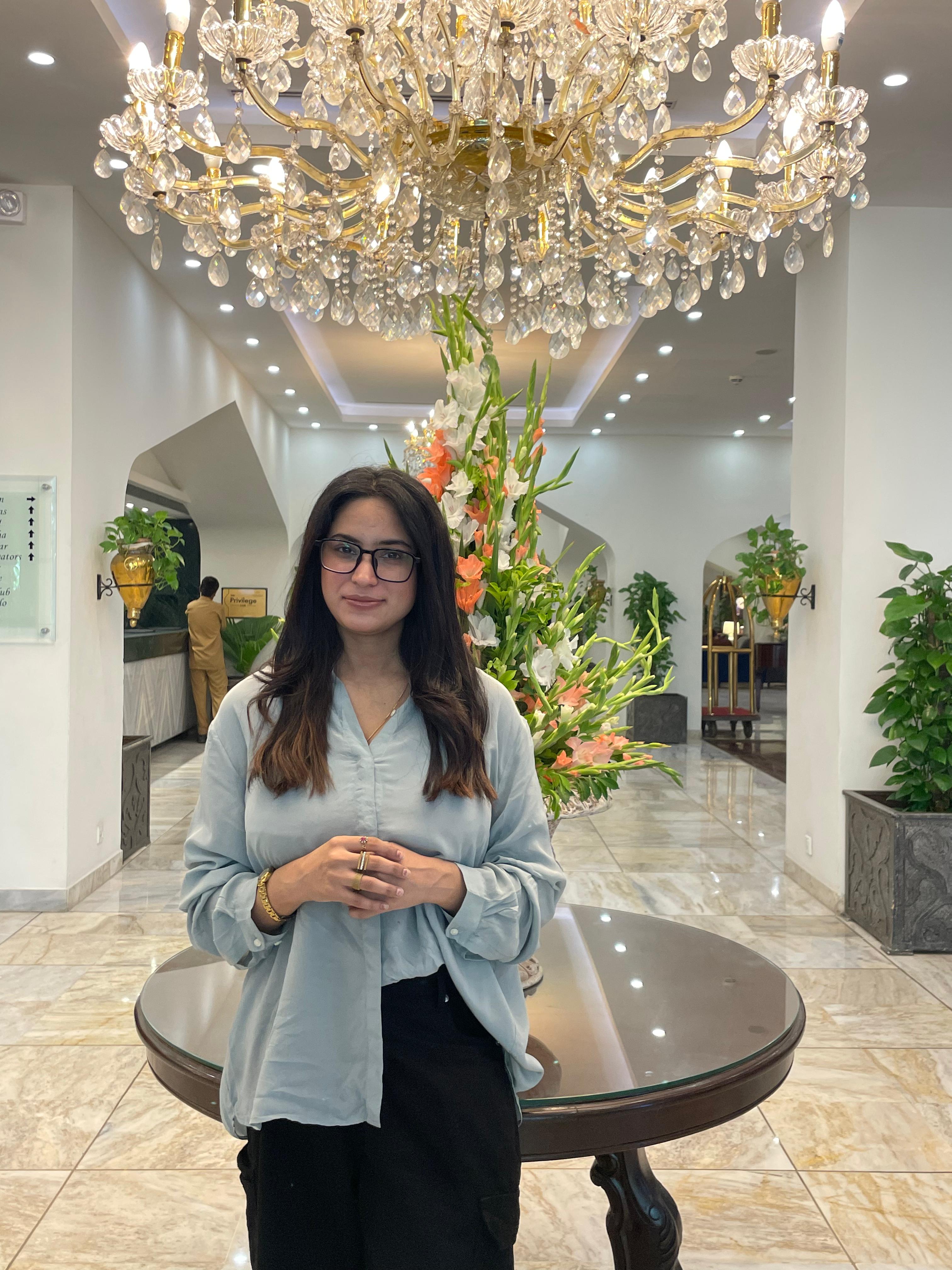
# The Missing Row
Turning Women's Realities Into Evidence
There is a particular kind of silence in a dataset.
It is the silence of the women who are missing from it absent from the leadership row, the wage column, the founder list. For years I tried to give that silence a voice through teaching and mentoring. Now I am learning to give it something harder to argue with: numbers.
This is the story of how a teacher from Pakistan, the first girl in her family to work, became someone who believes a dashboard can be an act of advocacy.
The first girl to work
The first decision that shaped everything came when I was eighteen.
I was the first girl in my family to step outside the boundaries usually drawn around women and choose work alongside education. While many around me believed a young woman should stay within familiar limits, I took my first job at an elementary school.
I still remember the nervous early mornings earning, learning, and slowly meeting a version of myself that wanted independence and a place in the world beyond what had already been decided for me.
Being the first was easier inside my home than outside it. My parents supported me wholeheartedly. The world outside had opinions, and it aimed most of them at my father.
Why are you letting your daughter work?
What if it affects her marriage prospects?
Girls don't need to work if their families can provide.
Those questions were rarely aimed at me. They were aimed at him, as though supporting his daughter's ambition was something that required defending. Looking back, I understand how much courage support can take. My parents chose trust over fear, and that choice set the direction of my life.
What education actually taught me
Alongside work, I completed my Bachelor's and Master's degrees in Education. Those years taught me far more than teaching methods. They introduced me to the language of women's rights, representation, and the invisible barriers women spend their lives navigating.
For the first time, I understood that many of the struggles women face are not individual failures. They are structural. That single realization never left me.
After graduating, I joined a university career placement department, guiding students into professional life. I supported students from every background, but I was drawn most to the young women because they carried the questions I had once carried myself.
Can I build a career and still have a family?
What do I say when people tell me certain professions aren't for women?
What if my dreams are bigger than what's expected of me?
They came for career advice. What many of them needed was permission to believe in themselves. I told them to apply, to speak up, to negotiate, to challenge limits that existed long before they were born. Those conversations became the most meaningful work I had ever done.
I didn't yet know life was preparing a version of those same questions for me.
The chapter I thought ended my story
At what felt like the peak of my career, I became a mother to a baby girl.
When my daughter Amairah was six months old, I made the hard decision to leave my job and raise her full-time. I still remember my last day, and the thought that kept repeating: This is it. Ambitious Maliha is gone now.
Motherhood was its own kind of heaven. But alongside the joy there was grief not for motherhood, but for the self I thought I had folded away and shelved.
It took me a long time to understand a simple thing: becoming a mother had not replaced who I was. It had added a chapter. Ambition and motherhood are not opposites. Wanting both does not make us less grateful mothers. It makes us human.
The pivot I didn't see coming
One day a friend mentioned a diploma program in Digital Marketing and E-commerce. I enrolled to keep my mind engaged. I had no idea it would change my direction entirely.
As I worked through marketing, consumer behavior, business strategy, and analytics, one thing reached out and held my attention: Data.
The more I learned, the more I saw that data is not numbers on a screen. Behind every percentage there are people, stories, and realities that usually go unnoticed. For someone who had spent years advocating for women, that was revolutionary.
Data could turn experience into evidence.
Instead of saying women face barriers, I could show employment gaps, wage disparities, leadership representation, gaps in educational access, entrepreneurship trends. Data could make invisible realities impossible to ignore. That was the moment I fell in love with analytics.
What I'm building now
I work in Excel, SQL, and Power BI. My first real project brought all three together and it came straight out of the cause I care about most.
I built a Power BI dashboard, Women Empowerment in Pakistan, that pulls the latest official statistics from 2023 to 2025 into a single view: literacy, labour-force participation, higher education, financial inclusion, women-owned businesses, parliamentary representation, and digital access. The numbers came from credible national and global sources — the Pakistan Bureau of Statistics, the World Bank's Global Findex, the Higher Education Commission, SMEDA, the Election Commission of Pakistan, and Data portal cleaned and modelled so they could finally be read side by side instead of scattered across separate reports.
I expected the headline gaps. What I didn't expect were the gaps hiding inside the gaps. Three findings stopped me.
Education is rising, but the workforce isn't catching it. Women now make up 48.6% of higher-education enrolment — close to parity. Yet female labour force participation sits at just 24.4%. We are educating women and then losing them somewhere between the campus and the workplace.
Rural women work more than urban women. Female participation is 28.3% in rural areas versus 19.4% in cities the opposite of what I assumed. The explanation is in the next chart: 64.8% of working women are in agriculture, much of it informal and unpaid family labour. In other words, the participation rate isn't always measuring empowerment. Sometimes it's measuring necessity.
Owning a phone isn't the same as being online. 69.3% of women own a mobile phone, but only 38.7% use the internet. Access to a device hasn't closed the digital gender gap — agency is a separate barrier with its own causes.
And the provincial spread was a story of its own: female literacy runs from 79.6% in Islamabad to 33.0% in Balochistan. A tidy national average of 49.8% hides a country pulling in very different directions.
This is exactly what I mean when I say data turns experience into evidence. "Women face barriers" is a sentence people can nod at and move past. "Women are 48.6% of university enrolment but 24.4% of the workforce" is a sentence that demands a follow-up question.
I built it to be used, not just admired. A women's-empowerment organization can use it to target programs where the gaps are widest instead of where they're assumed to be. A women-led conference can put it on screen to ground a keynote in national data rather than generalities. A policymaker can stop treating "the digital gender gap" as a vague worry and point to the thirty-point distance between owning a phone and getting online.
Today I see dashboards as more than charts. To me they are instruments of advocacy. Every graph represents people. Every percentage represents lives. Every trend points to a place where change is possible.
Leadership was never the question
One thing drives me more than anything: the visibility of women in leadership and decision-making.
Across industries and especially in countries like Pakistan women remain underrepresented in the rooms where decisions are made and futures are shaped. The conversation is too often framed as whether women can lead.
I think we are long past that question.
Women have led families, communities, classrooms, and businesses for generations. Leadership has never been the issue. "Representation has."
I want to use data to move that conversation forward to help organizations understand the value of diversity through evidence rather than assumption. I want a hiring manager to see a gap and not be able to unsee it. I want young girls to grow up watching women lead teams and companies, not as exceptions, but as the obvious shape of things.
I started this journey as the first girl in my family to work. I am continuing it as a woman who builds the case, in data, for every girl who comes next.
And this time, I am not folding the ambitious version of myself away. I am putting her to work.
Maliha Khalid is an educator-turned-data analyst based in Pakistan. She works across Excel, SQL, and Power BI as a Data Analyst, Power BI Developer, and Digital Marketing Specialist, with a focus on women's representation and leadership. Turning data into insights, empowering impact.
linkedin.com/in/malihakhalid1 · malihakhalid22@gmail.com
0 comments on “The Missing Row”
Comments from signed-in readers are published immediately. Keep it professional.
Sign in to join the conversation.