The Doctor Told Me to Get Pregnant. I Built a Company Instead.
A Medical Laboratory Scientist was told by her doctor to get pregnant to escape her hormonal symptoms. That dismissal became the founding moment for FEMME Health Companion, and a reckoning with how the tech industry has quietly built systems that treat women's bodies as an afterthought. This is what building differently actually looks like.
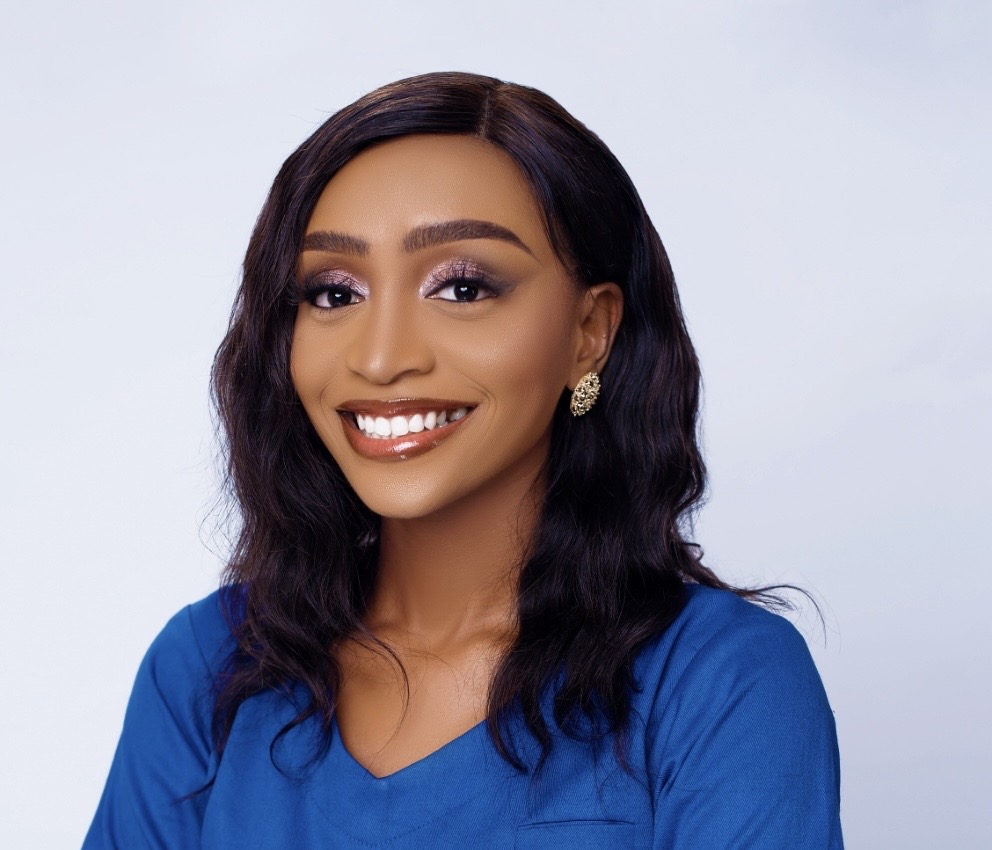
A doctor once told me to get pregnant to escape my menstrual symptoms.
I was a Medical Laboratory Scientist. I understood what was happening in my body at a cellular level. I could read a lipid panel, interpret bilirubin results, and explain hormonal pathways most people have never heard of.
And still, in that consultation room, I was handed the oldest dismissal in the book, dressed up in a white coat and called medical advice.
That moment did not just make me angry. It made me look around.
I looked at the clinical systems we had built. The appointment pipelines, the referral chains, the diagnostic frameworks designed for bodies that follow predictable, linear patterns.
Then I looked at the technology we had layered on top of those systems; the apps, the trackers, the platforms, and I saw the same thing. Cold. Distant. Built for a version of the female body that does not fully exist.
We had spent decades building world-class technology. And we had quietly decided that women's hormonal reality was not a design requirement.
The Gap No One Was Naming
Conditions like PCOS, PMDD, and endometriosis affect hundreds of millions of women globally. They shape how women sleep, work, think, eat, move, and relate to the people around them. They are not edge cases. They are not rare. They are the daily, invisible reality of a significant portion of the workforce, the leadership pipeline, and the talent pools every company is trying to retain.
And yet the support infrastructure we built for these women looks like this: a one-month wait for a GP appointment, a tracking app that requires daily input and emotional energy they do not have, and a wellness programme that offers a meditation session during a week when the pain is so bad they cannot sit upright.
We named the problem "awareness." We ran campaigns. We added period emojis to workplace policy documents. And we called it progress.
What we did not do was ask what these women actually needed, on a Tuesday afternoon, when they were in the middle of a hormonal crash and still had three hours of meetings left.
What I Built Instead
FEMME is a daily hormonal lifestyle companion delivered through WhatsApp. Not an app. Not a portal. Not another interface requiring a login and a learning curve.
WhatsApp, because that is where the women I am building for already are. Because frictionless access is not a feature, it is the difference between a woman reaching for support and a woman suffering in silence because the tool was too much effort.
Every day, FEMME shows up in their phone. With a check-in that asks how they are actually doing. Not a wellness algorithm performing empathy. With small, doable actions calibrated to their energy that day, not to some idealised version of what a healthy woman should be able to accomplish.
No streaks. No shame. No toxic positivity.
The design principle underneath all of it is something I call Invisible Tech. Support that fits into a woman's life rather than adding to her cognitive load. Technology that does the work of showing up, so she does not have to remember to use it.
Why This Is a Tech Problem, Not Just a Health Problem
I want to be direct about something the tech industry has been slow to say out loud.
When we build systems that do not account for hormonal variability, we are not building neutral systems. We are building systems with a bias baked in. A bias toward the body type that does not experience monthly hormonal cycles, does not manage chronic pain alongside a full-time career, and does not lose three to ten days a month to symptoms that have no quick fix.
That bias has a cost. Women leave roles. They shrink their ambitions. They spend enormous mental energy managing invisible symptoms in environments that were not designed to see them.
Hormonal health literacy is not soft programming. It is business intelligence about half the workforce. When a woman is managing untreated PCOS or PMDD, she is not underperforming. She is performing under conditions her workplace has never once accounted for. That distinction changes everything about how you respond as a leader.
What Building Differently Actually Looks Like
I did not set out to disrupt femtech. I set out to build what should have already existed.
That distinction matters. Disruption implies the old thing was working and you are just doing it faster or cheaper. What I found was a gap; a complete absence of something, and I built toward it.
Building differently, in practice, means starting with the question "what does she need at 2pm on a Thursday when she is exhausted and her symptoms are flaring?" rather than "what feature can we add to the product roadmap?"
It means treating warmth as a technical requirement, not a soft skill. It means understanding that the average user does not exist, that the women managing PCOS in Lagos and the women managing PMDD in London are both real, both specific, and both deserve a system that sees them.
It means being willing to sit with the complexity of building for bodies that are not linear, in a tech industry that has always rewarded simplicity and scale above everything else.
The Part That Does Not Get Said Enough
Building in this space as an African woman, as a scientist, as someone who has personally sat in that clinical room and been dismissed, it is not just a professional pursuit.
It is a reckoning.
Every time I ship something for FEMME, I am thinking about the woman who will receive it at the moment she feels most invisible.
I am thinking about what it would have meant for me, years ago, to have something that simply showed up and said: I see what you are carrying. Here is something that might help. You do not have to explain yourself.
That is the technology I am building.
Not the most sophisticated. Not the flashiest. But the most necessary.
And in a world that has spent decades building for what is possible, I think it is time we started building for what is necessary instead.



0 comments on “The Doctor Told Me to Get Pregnant. I Built a Company Instead.”
Welcome to the comments section. We moderate every submission according to our community guidelines.
Loading conversation…